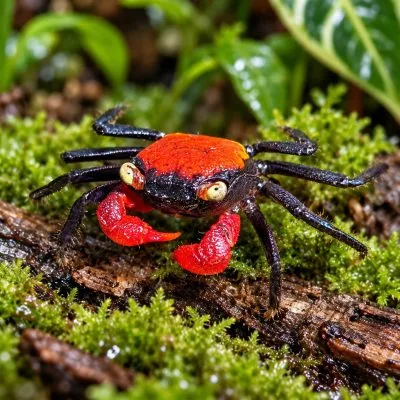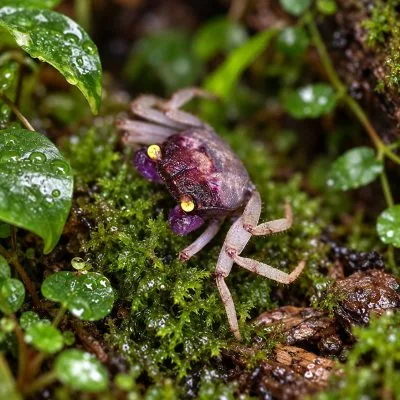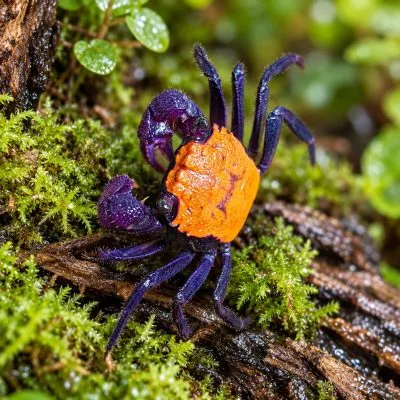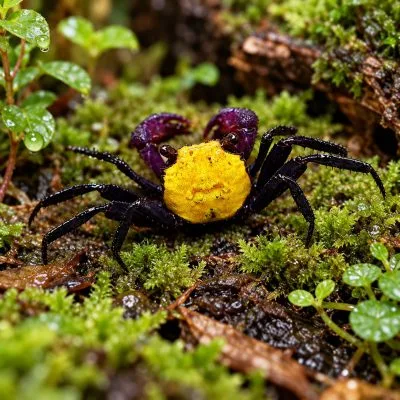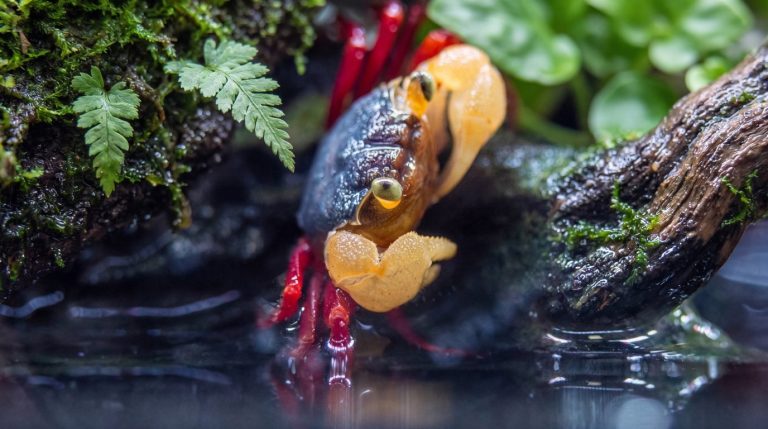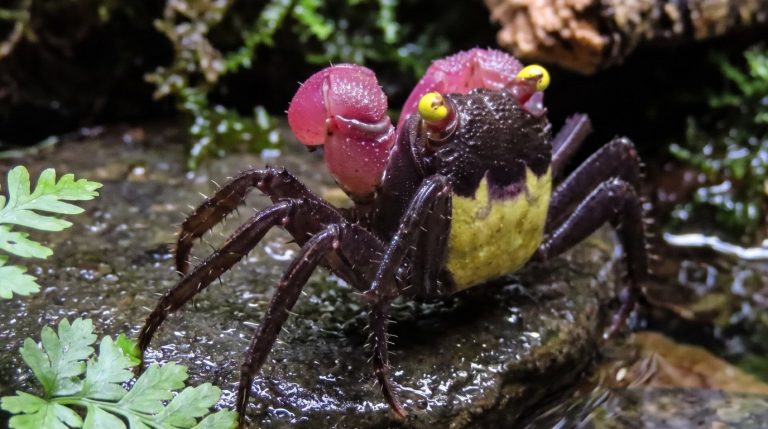
No, the vampire crabs sold in the hobby don’t need salt water at any stage of their life. They’re freshwater crabs: the genus is known for living wholly in fresh water, even though its relatives came from the sea.12 Their water section should hold plain fresh water, with no marine salt, no aquarium salt and no brackish stage for breeding.
Are vampire crabs freshwater or saltwater crabs?
Freshwater. Vampire crabs belong to Geosesarma, a large genus of semi-terrestrial and terrestrial crabs that live in freshwater habitats across Southeast Asia.3 The ones sold as pets live their whole lives without salt, so nothing in their tank should be salty.
Freshwater doesn’t mean they live underwater, though. A vampire crab spends its time on damp land and climbs into the water when it needs to, so an aquarium filled to the top is the wrong home, however clean the water is. Give it a paludarium that’s mostly land with a pool of fresh water it can climb into, because vampire crabs can’t live in water full time.
Why don’t vampire crabs need salt water to breed?
Vampire crabs breed in fresh water because most species skip the larval stage that sends other crabs to the sea. Over 90% of the species whose egg size is known lay large eggs that hatch straight into tiny crabs.3 Some groups of land crabs that stayed close to fresh water breed the same way, with young crabs coming out of the eggs in place of drifting marine larvae.4 Ghost crabs sit on the other side of that split: their young grow up in the sea, which is one reason vampire crabs and ghost crabs can’t share an enclosure.
That’s the step a brackish tank is meant to cover in other crabs, and vampire crabs don’t have it. If a female in your paludarium carries eggs, the crablets appear in the same fresh water, so there’s nothing to change or add for vampire crab breeding.
The genus does have exceptions. Geosesarma hednon, a wild species from Taiwan and the Philippines that lives in Taiwan less than 300 meters from the sea, lays small eggs, and its females migrate to the sea to release their larvae.1 The crabs sold as vampire crabs in the hobby raise their crablets in freshwater tanks, so that exception doesn’t reach your paludarium. The rest of vampire crab care, from feeding to molting to tank mates, works with the same plain fresh water.
Why do some care sheets say vampire crabs need brackish water?
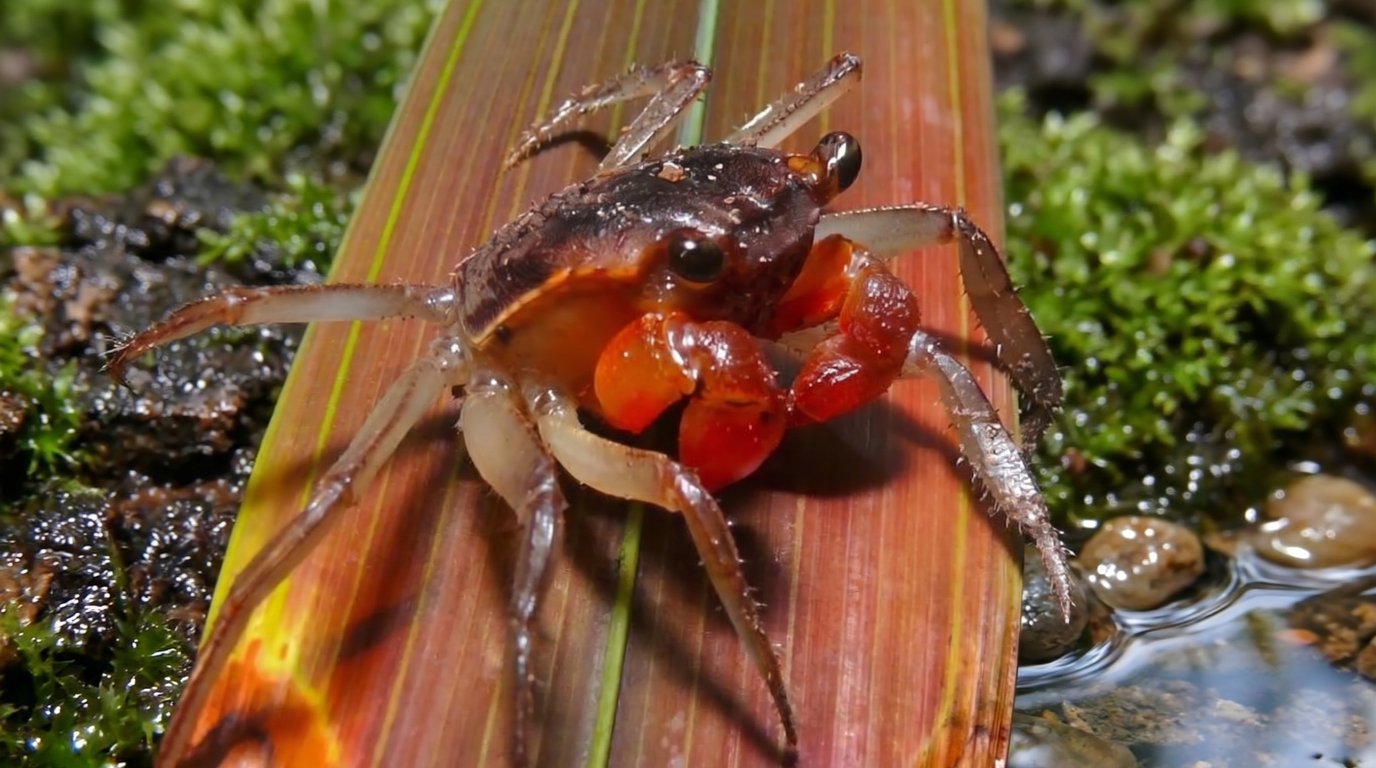
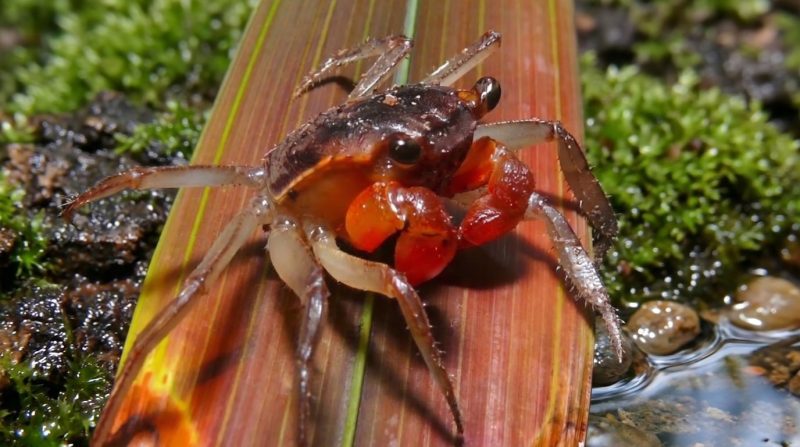
Brackish advice can come from mixing vampire crabs up with red claw crabs, which are sometimes sold as freshwater crabs too. The crab traded under the name bidens, now Parasesarma bidens, is an estuary and mangrove crab.5 In a lab study of its larvae, they died within 12 hours in fresh water and in water of 5 parts per thousand salt, and only grew into crabs at 10-35 parts per thousand.6
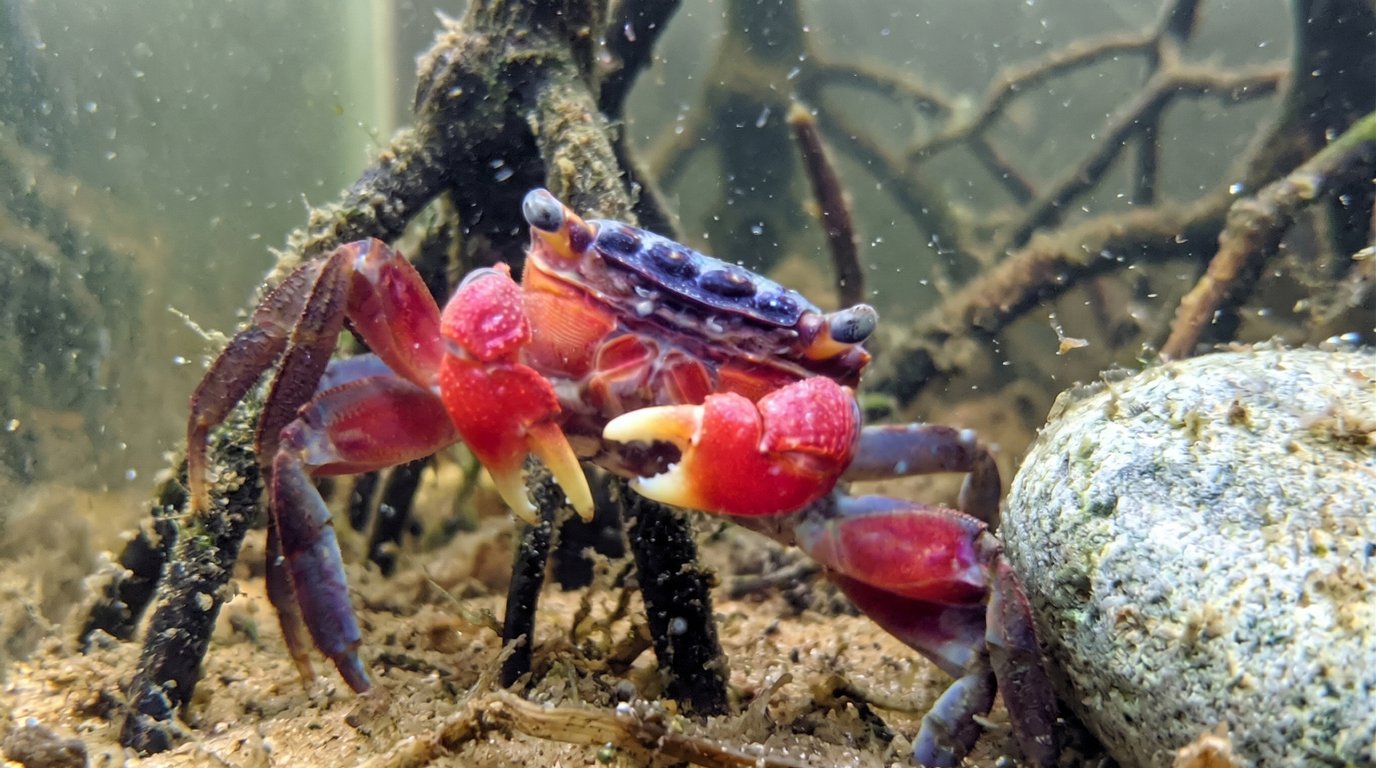
So a red claw crab tank has a reason to be brackish, and a vampire crab tank doesn’t. If you’re not sure which crab you’ve got, the differences in vampire crab vs red claw crab go well past the water.
Is a pinch of aquarium salt good for a vampire crab’s gills?
No. Adding aquarium salt to the water section won’t help your crab’s gills, and we’d leave it out. A land crab keeps its gills working by holding water in its gill chambers, and that held water is also where the gills take up the dissolved salts the body needs.4 Plain fresh water already does that job.
What hurts the gills is drying out. When a crustacean dries out, its thin gill plates collapse and it can’t take in oxygen properly.4 So if a care sheet tells you salt keeps the gills moist, put the effort into damp moss, a closed lid and a water section your crab can climb into whenever it wants. Nobody has tested how much salt a vampire crab can put up with, so there’s no safe pinch to give you.
The sea salt dish sometimes suggested for molting crabs falls under the same answer. Minerals for a molt are a different question from salt, and the mineral supplement vampire crabs need to molt isn’t table salt or marine salt.
What water should go in a vampire crab’s water section instead?
Use clean fresh water with nothing added but a conditioner. Ordinary tap water is fine for the water section once a conditioner for chlorine and chloramine has gone in. One keeper who moved from soft filtered water to harder tap water saw no change in the crabs. How often that water needs replacing depends on the setup you pick for vampire crab water changes and filtration.
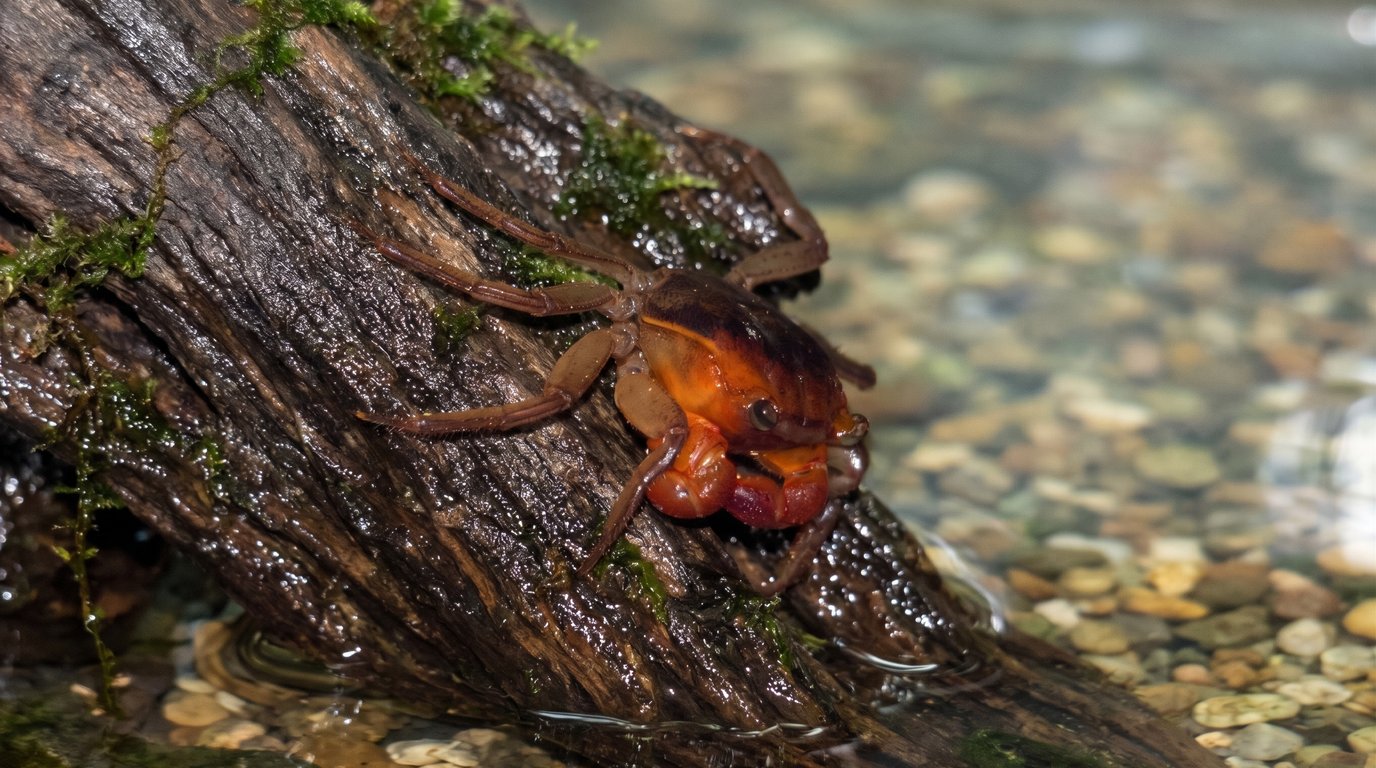
We refill the water section with RO water that we’ve remineralized first.
If you use RO water as we do, remineralize it the way you would for a shrimp tank. A remineralizer is a different product from marine salt, so it doesn’t make the water brackish. You don’t need RO, though. Treated tap water is a normal choice.
Do shrimp share the water? Then the water has to suit the shrimp first, because vampire crabs can live with shrimp only when that water stays inside the shrimp’s own range. Neocaridina and Bee or Crystal shrimp are freshwater animals too, so salt has no place in a shared water section either.
Set up the freshwater paludarium before you buy vampire crabs
Build the land, the lid and a fresh water section your crabs can fully enter before you order. Everything in our catalog is bred or propagated in our own tanks rather than collected from the wild. When you choose tank-bred vampire crabs, you pick Male or Female for each crab on the product page.
References
6 Sources
- Ng, Liu and Schubart, Geosesarma hednon, a new species of terrestrial crab (Crustacea: Decapoda: Brachyura: Sesarmidae) from Taiwan and the Philippines (Zenodo archive copy of the paper), Raffles Bulletin of Zoology 52(1): 239-249, 2004.
- Grinang, Ng and Ng, A new species of vampire crab of the genus Geosesarma De Man, 1892 (Crustacea: Brachyura: Sesarmidae) from a montane forest in southwestern Sarawak, Malaysian Borneo, Raffles Bulletin of Zoology 74: 457-464, 2026.
- Shy and Ng, Geosesarma mirum, a new species of semi-terrestrial sesarmid crab (Crustacea, Decapoda, Brachyura) from central Taiwan, ZooKeys 858: 1-10, 2019.
- Lucu and Turner, Ionic regulatory strategies of crabs: the transition from water to land, Frontiers in Physiology 15: 1399194, 2024.
- Shih, Hsu and Li, Multigene Phylogenies of the Estuarine Sesarmid Parasesarma bidens Species Complex (Decapoda: Brachyura: Sesarmidae), with Description of Three New Species, Zoological Studies 62: e34, 2023.
- Islam, Shokita and Nagai, Effects of salinity on the larval development of the mangrove dwelling semiterrestrial sesarmine crab, Perisesarma bidens (De Haan), Crustacean Research 29: 152-159, 2000.