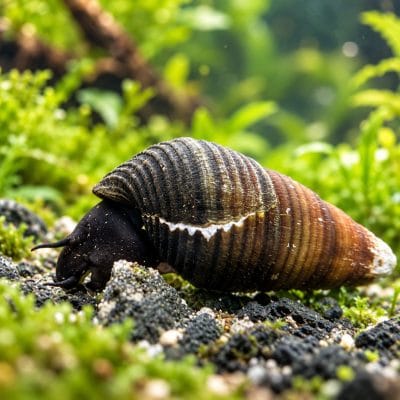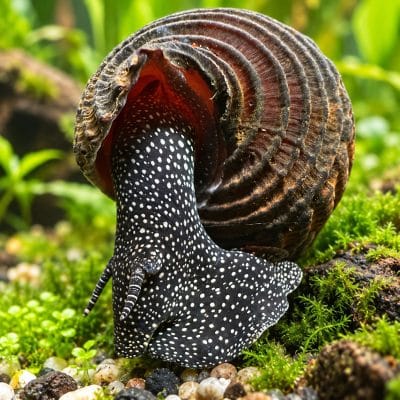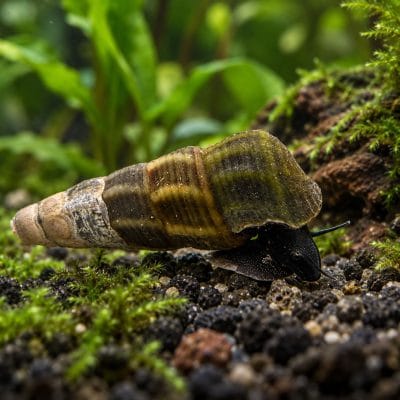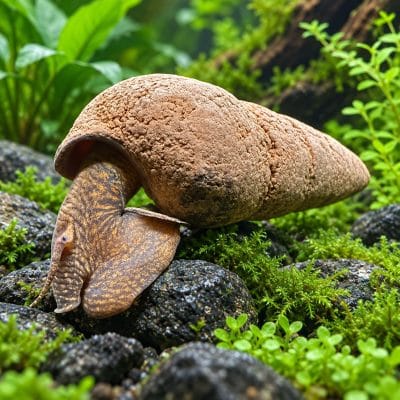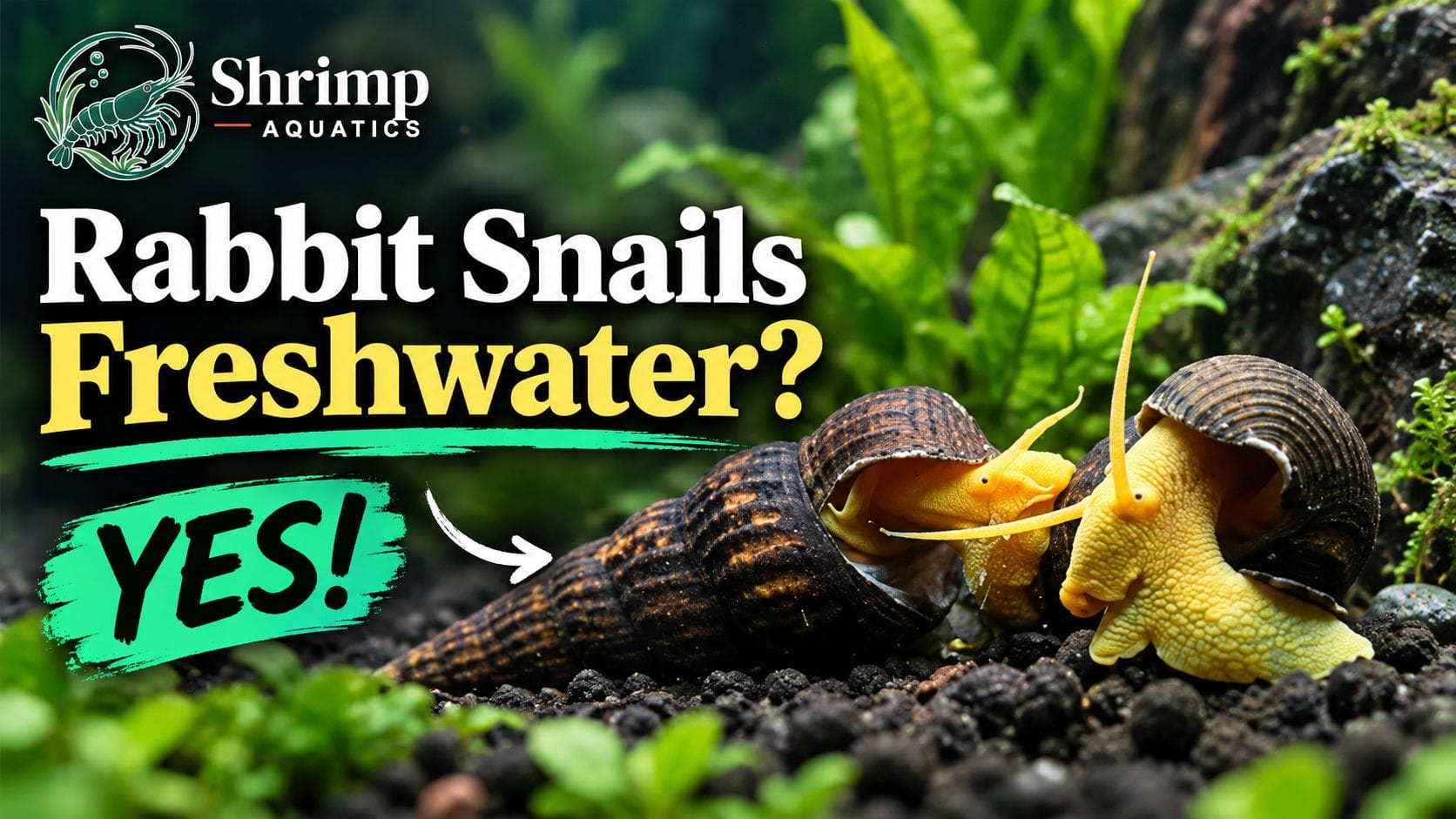
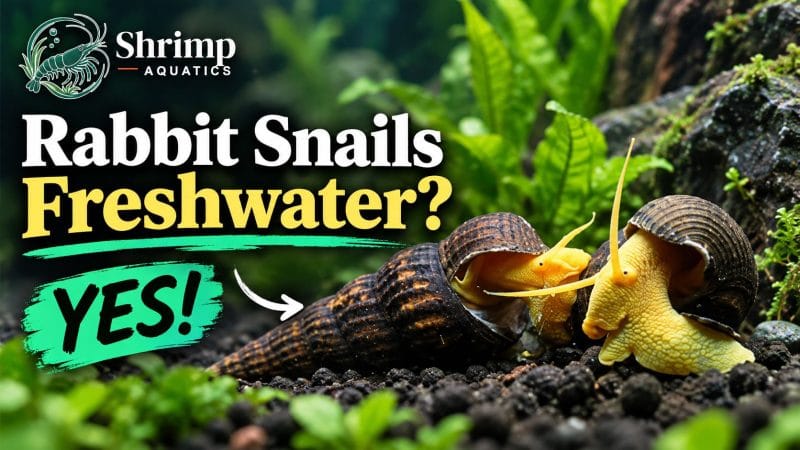
Yes. Rabbit snails (Tylomelania spp.) are freshwater snails, and strictly so: the genus is endemic to Sulawesi, Indonesia, where it lives in lakes, rivers and streams.1 The catch is which freshwater. They need warm, alkaline, mineral-rich water, and that’s what decides whether your tank can hold one.
Do rabbit snails ever need brackish or salt water?
No, not at any point in their lives. Researchers who sampled the genus across its whole range on Sulawesi describe it as a strict freshwater inhabitant with poor powers of dispersal.1 That fits where rabbit snails come from: the lakes and rivers of a single Indonesian island, Sulawesi.
Even the populations nearest the coast stay in fresh water. The same survey found rabbit snails near the sea only where rivers or streams run straight down from nearby mountains, or in karst outcrops.1 There’s no estuary stage in their lives, so there’s nothing brackish to copy at home.
Breeding doesn’t change the answer. A female carries her young in a brood pouch and releases them as fairly large juveniles that already have a shell.1 There’s no larval stage that drifts out to sea, and the whole life cycle happens in fresh water. Because of the way rabbit snails reproduce, you’ll never see eggs on the glass, only young snails on the rock.
You’ll see keepers suggest that rabbit snails tolerate brackish water, often because a care sheet recommended a salt dip. Nothing in their biology points that way. We’d keep aquarium salt out of a rabbit snail tank, and if you’re weighing a salt treatment for any reason, get specialist advice first.
Which freshwater setup keeps a rabbit snail healthy?
A warm, alkaline Sulawesi tank, held steady. These are the numbers we keep rabbit snails to. They’re the same numbers we use for Sulawesi shrimp, because no published study gives an aquarium range for Tylomelania itself.
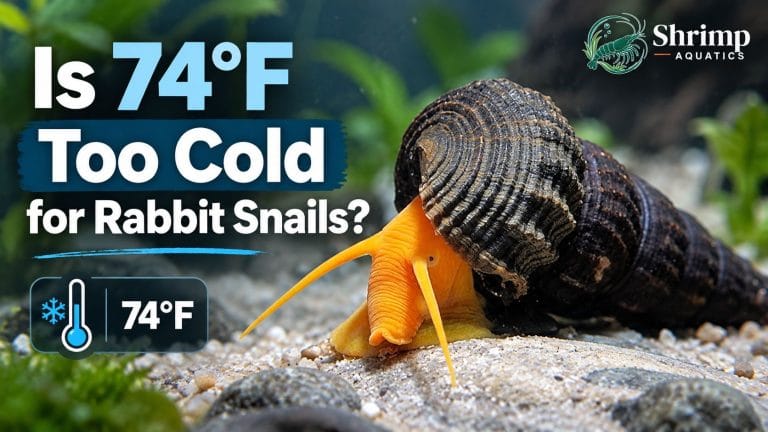
| Temperature | 79-86°F (26-30°C) |
|---|---|
| pH | 7.5-8.5 |
| GH | 4-8 dGH |
| KH | 3-6 dKH |
| TDS | 150-250 ppm |
| Nitrate | Kept under 10 ppm |
| Substrate | Inert sand or gravel, no pH-lowering aqua soil |
| Tank | Mature, with a visible film of algae and biofilm on rock and glass |
Will any clean, cycled tropical tank do? Only if it already holds those numbers. We rate the snail itself as moderate to keep, but the water is the demanding part. That makes a rabbit snail a poor first step into Sulawesi keeping, and a tank that has only just finished cycling isn’t ready for one. Build the tank to the full range for Sulawesi rabbit snail care first, and add the snail once it holds.
Stability matters as much as the range. If you need to shift pH, hardness or temperature to get there, do it slowly and before the snail arrives.
Can rabbit snails share a Neocaridina or Bee shrimp tank?
Not a Bee shrimp tank, and not a cool Neocaridina tank. Neocaridina are usually kept at 65-78°F (18-26°C), below the 79°F (26°C) where a rabbit snail tank starts, so the snail can’t move into their water. The other way round works better: at Shrimp Aquatics a small group of Neocaridina lives and breeds in some of our warm Sulawesi tanks, which is how we keep rabbit snails with Neocaridina shrimp. Bee and Crystal Caridina want soft, acidic water, the opposite of what this snail lives in. The Sulawesi lake species are the exception, so rabbit snails with Caridina shrimp only work when the shrimp come from the same island.
Sulawesi shrimp are the natural partner. They live in the same water and graze the same film on rock and glass, so the limit is whether that film can feed both. A snail this size eats a fair share of it, so count every snail when you plan stocking. Keeping rabbit snails with Sulawesi shrimp goes best when you start with one or two snails and watch the film.
If your tank already runs in that range, our Sulawesi rabbit snails are tank-bred by Shrimp Aquatics, not collected from the wild. We don’t promise breeding, sex or the number of young from any order.
References
1 Source
- A Snail Perspective on the Biogeography of Sulawesi, Indonesia: Origin and Intra-Island Dispersal of the Viviparous Freshwater Gastropod Tylomelania, von Rintelen T, Stelbrink B, Marwoto RM, Glaubrecht M, PLOS ONE 9(6): e98917, June 27, 2014.
Ready to get started?
Shop our Sulawesi Snail collection
12 products available · Live Arrival Guarantee