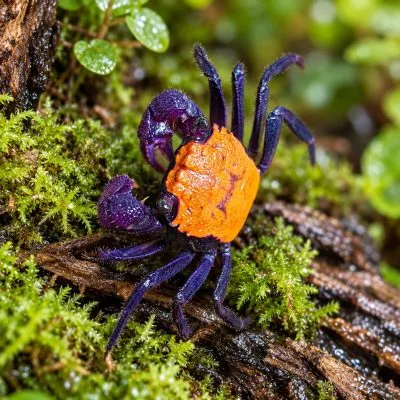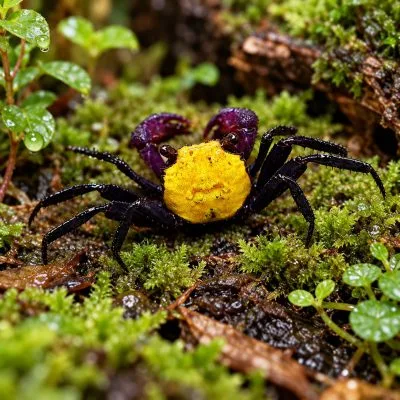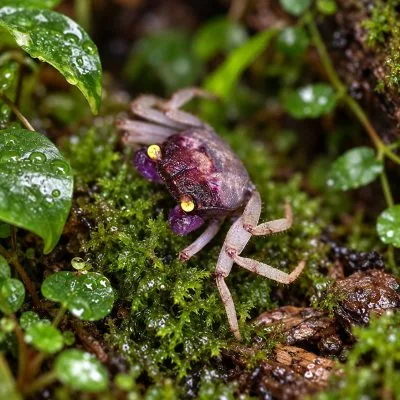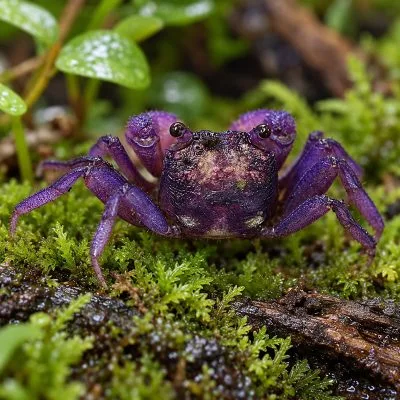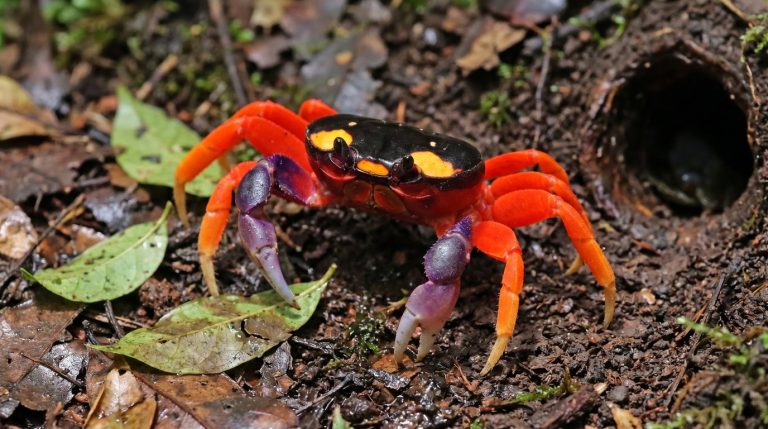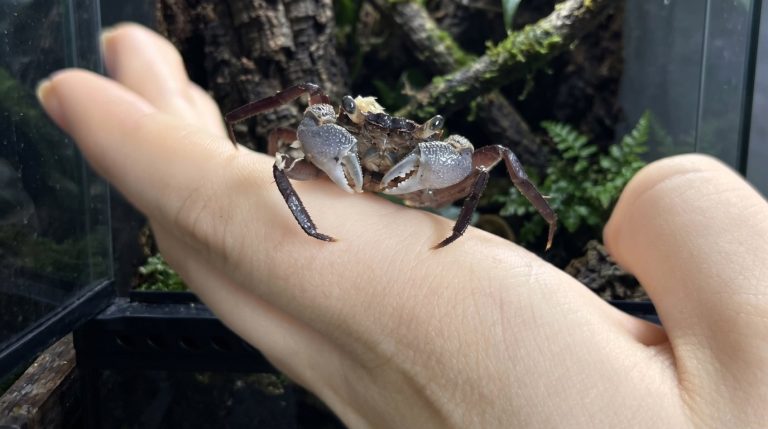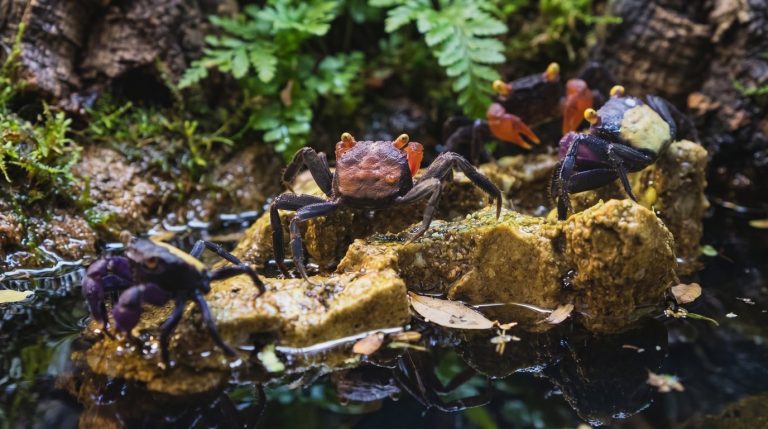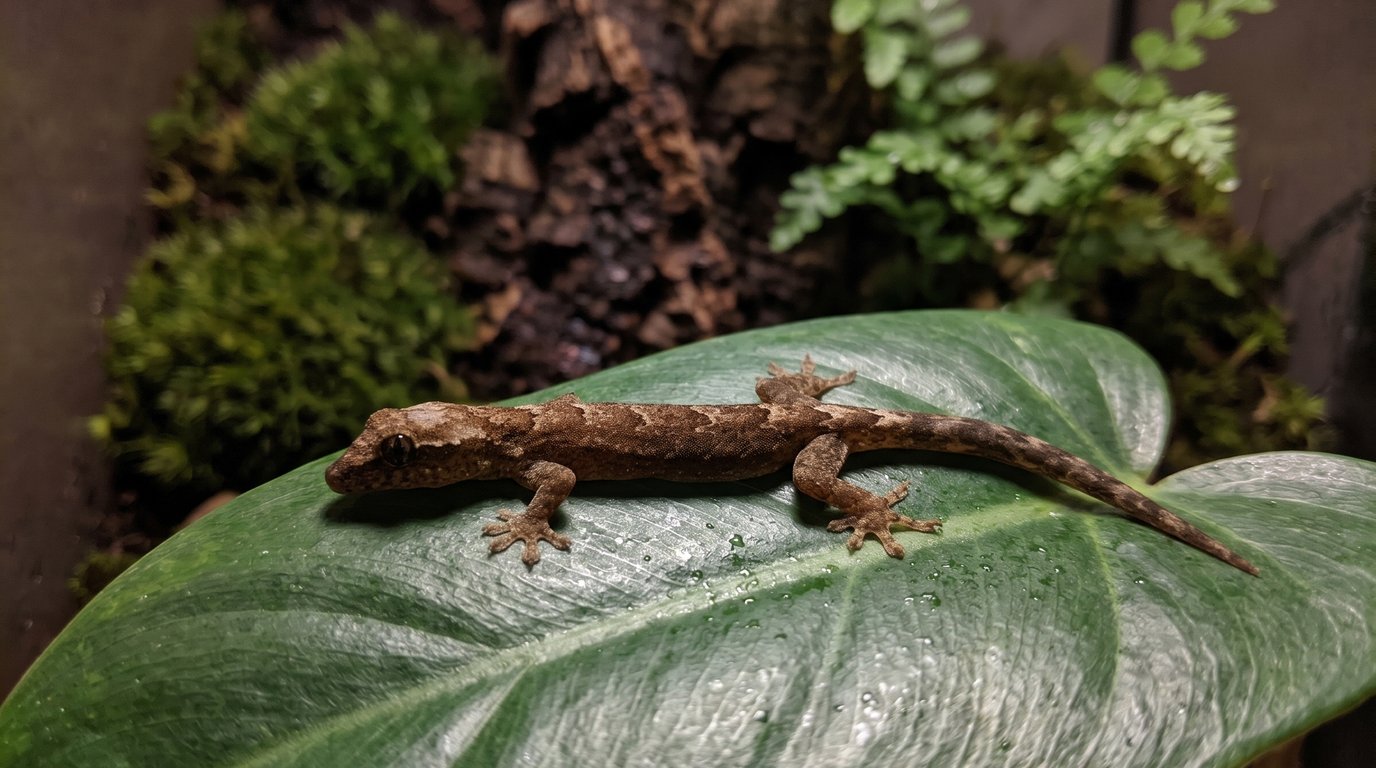
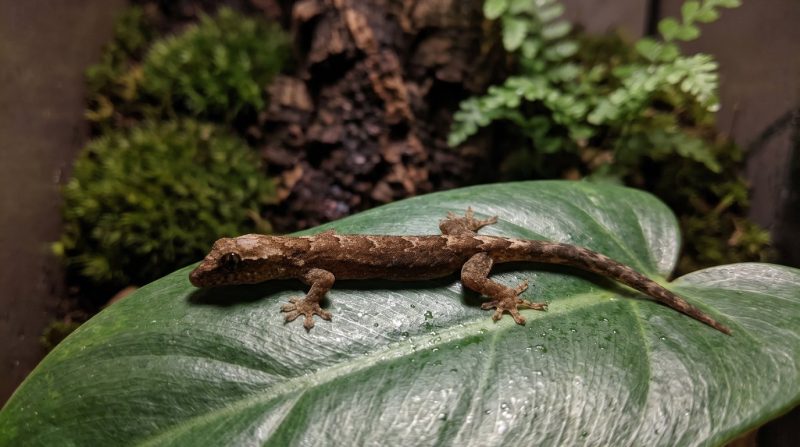
No, mourning geckos and vampire crabs shouldn’t share a tank. A mourning gecko breeds without a mate, so one gecko can turn into a crowd you never planned for. Mourning geckos eat small crustaceans in the wild, which puts crablets on the menu. And a hunting crab is out on the floor at the same hours a small gecko is. Give the geckos a vivarium of their own and keep the crab tank to the animals that suit vampire crab care.
Why does a mourning gecko colony outgrow a vampire crab tank?
Because almost every mourning gecko is a female that lays eggs without a mate. The species, Lepidodactylus lugubris, reproduces by parthenogenesis. Each female produces daughters that are clones of herself, two hard-shelled eggs at a time.1 You don’t need a pair to get babies. One gecko is enough.
The pace is quick. In one study, a single captive female kept with no other gecko laid 12 clutches in two years. The gap between clutches ran 24-73 days, about 34 days on average.2 The authors worked out that one female could leave up to 24 daughters a year. Each of those daughters starts laying once she’s grown.
You probably won’t see the eggs coming either. Mourning geckos stick their eggs into crevices, under bark, behind logs and into leaf bases, often at shared nest sites.3 That’s a fair description of a planted crab paludarium. The eggs take about 65-103 days to hatch, longer when it’s cooler,1 so new geckos turn up months after you last checked the cork.
A crab tank is built around the crabs’ own numbers: how many males, how many females, room for burrows. Geckos that keep multiplying in the same space change that balance every few months. You’d be the one pulling eggs and juveniles out to hold it steady.
Will mourning geckos eat vampire crablets?
We’d expect them to, given the chance. Mourning geckos eat small crustaceans in the wild. Isopods and amphipods turned up in the stomachs of wild-caught Lepidodactylus geckos on Palmyra Atoll, and in one forest type isopods were a large part of the diet.4 A crablet a few millimeters across, moving over the substrate at night, is that kind of prey.
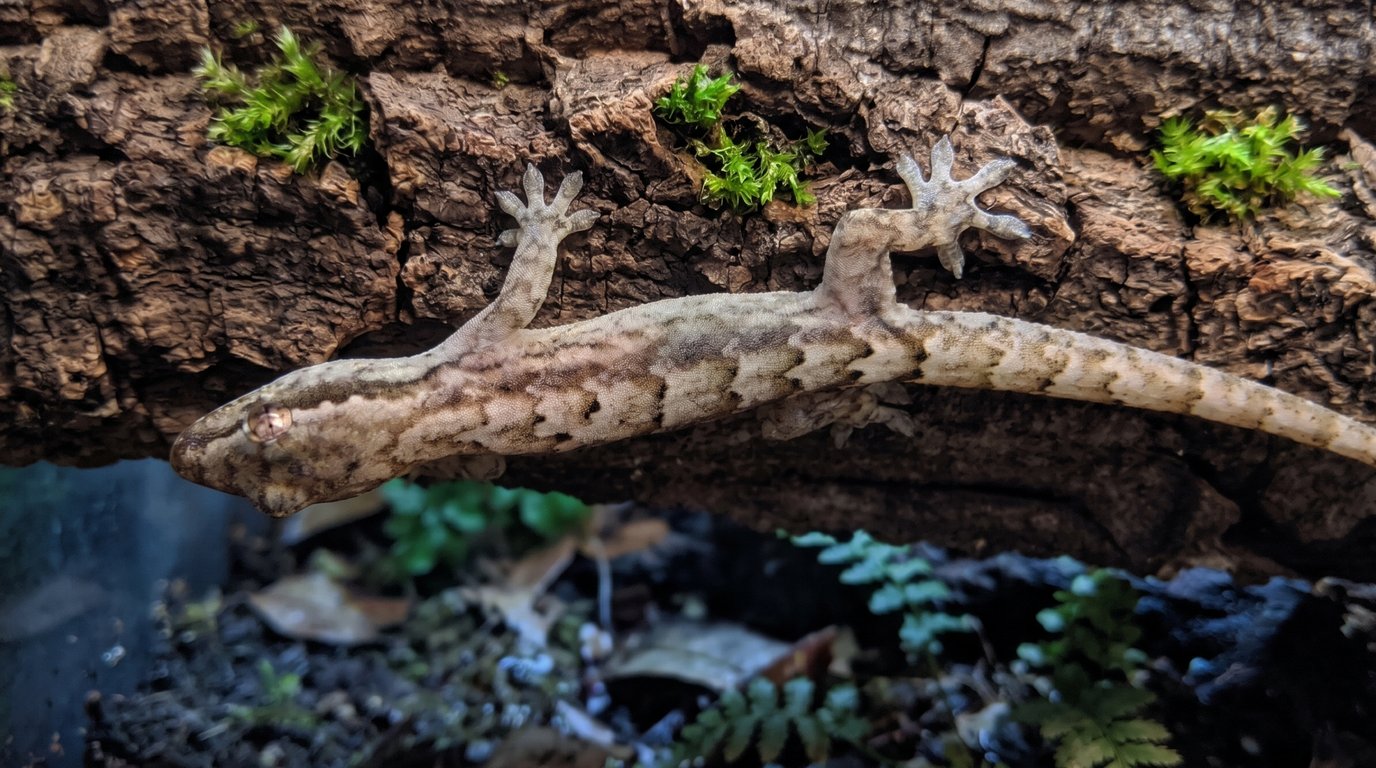
Nobody has published a case of a mourning gecko eating a vampire crab, so this is a judgment from what the gecko eats, not a recorded loss. It’s still the side of the risk we’d weigh most if you hope to raise crablets.
Crablets already have one predator in the tank. Adult vampire crabs eat the crablets they catch, which is why moving the young to a tank of their own raises the most of them. Add geckos and you’ve added a second hunter that climbs, so vampire crab breeding in a shared tank mostly feeds the geckos.
Can a vampire crab hurt a mourning gecko?
It can’t be ruled out, and a young gecko is the one most at risk. Vampire crabs can catch and eat small fish. A sleeper goby has been found half eaten beside a crab burrow, and two male guppies were taken within hours in another tank.
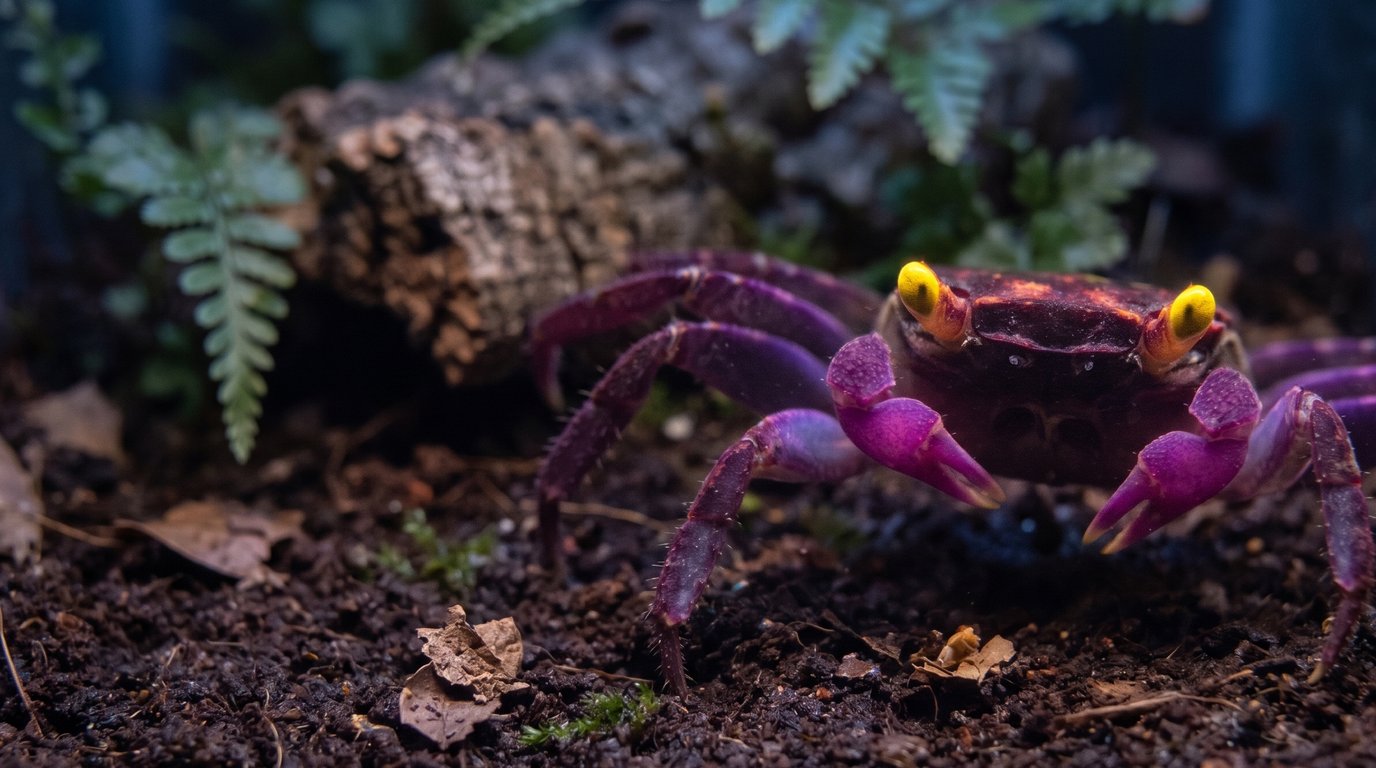
Size works against a hatchling. A newly hatched mourning gecko measures about 19 mm (3/4 inch) from snout to vent,2 while an adult vampire crab’s shell is about 10-15 mm across before you count its legs. That’s a crab and a gecko of roughly the same size meeting on the same floor.
They’d meet at night. Vampire crabs are nocturnal for the most part, coming out in the evening, at night and in the early morning. Mourning geckos are mostly active after dark too.3 A gecko that comes down to the ground, a food dish or the water’s edge at those hours shares it with a crab that’s looking for food.
Crabs do take lizards in the wild, though it’s rarely seen. In Costa Rica, a freshwater crab of another family was found at night under a rock in a stream, eating an anole held in its claw.5 The researchers couldn’t tell whether the crab had killed the lizard or found it dying. That crab is also far bigger than a vampire crab. It shows what a claw can do, not how often a vampire crab would try.
A grab doesn’t have to kill to do harm. Mourning geckos shed their tails easily when threatened.3 In many lizards the tail is a fat store, so a dropped tail can take reserves with it that the gecko has to rebuild.6
We haven’t kept geckos with our vampire crabs, so we can’t tell you how often it goes wrong.
Does a vampire crab paludarium suit a mourning gecko at all?
On temperature, yes. The climates wild mourning geckos live in have yearly averages that overlap most of the vampire crab temperature range of 72-85°F (22-29°C).7 Heat isn’t what keeps these two apart.
The water section is the awkward part. Molting is the reason vampire crabs need a water area in a vivarium deep enough to climb into and go fully under, so you can’t shrink it to suit a gecko.
A gecko that falls in has to climb back out, and wet feet don’t grip well. In lab tests on the much larger tokay gecko, wetted toe pads held less than a twentieth of their normal grip on glass. Under water, grip was lower still.8 That was a tokay, not a mourning gecko. Still, it’s a good reason to give any water a sloped exit of rock or wood, never a sheer glass wall.
What can live with your vampire crabs instead of mourning geckos?
If you want both animals, keep them in two enclosures. A tall mourning gecko vivarium and a crab paludarium can sit side by side on one shelf, each set up for the animal in it. The gecko eggs then stay where you expect them.
One keeper reports two adult blue bamboo day geckos (Phelsuma klemmeri) and their young sharing a 120 cm (4 ft) paludarium with vampire crabs for two years with no fights. The geckos kept to the top of the tank, the crablets were moved to a tank of their own, and these weren’t mourning geckos. One large tank like that isn’t a plan you can copy.
For the crab tank itself, shrimp are the easiest company in the water section, then small, quick fish. The vampire crab tank mates that work are the ones that stay in the water and share the crabs’ temperature.
Frogs don’t make the cut either, for a similar mix of reasons. Vampire crabs can’t live with frogs safely because the crabs’ water can drown a dart frog and frogs swallow crablets whole.
When the tank is set up for crabs alone, you can stock tank-bred vampire crabs, choosing Male or Female for each crab on the product page. Everything in our catalog is bred or propagated in our own tanks.
References
8 Sources
- Embryonic development of a parthenogenetic vertebrate, the mourning gecko (Lepidodactylus lugubris), Developmental Dynamics 248(11): 1070-1090, 2019.
- Intensive and efficient egg-laying tempo of the parthenogenesis mourning gecko Lepidodactylus lugubris, Herpetological Journal 33(4): 115-118, 2023.
- Mourning Gecko (Lepidodactylus lugubris), A. Arteaga and J. M. Guayasamin, Reptiles of Ecuador, 2023.
- Effects of Spatial Subsidies and Habitat Structure on the Foraging Ecology and Size of Geckos, PLOS ONE 7(8): e41364, 2012.
- Freshwater crabs as predators and prey: the case of Ptychophallus uncinatus from Costa Rica, Central America, Latin American Journal of Aquatic Research 47(1): 18-26, 2019.
- The regenerated tail of juvenile leopard geckos preferentially stores more fat than the original, Zoology 118(3): 183-191, 2015.
- Continuous expansion of the geographic range linked to realized niche expansion in the invasive Mourning gecko Lepidodactylus lugubris, PLOS ONE 15(7): e0235060, 2020.
- The Effect of Surface Water and Wetting on Gecko Adhesion, Journal of Experimental Biology 215(17): 3080-3086, 2012.
Ready to get started?
Shop our Vampire Crab collection
8 products available · Live Arrival Guarantee