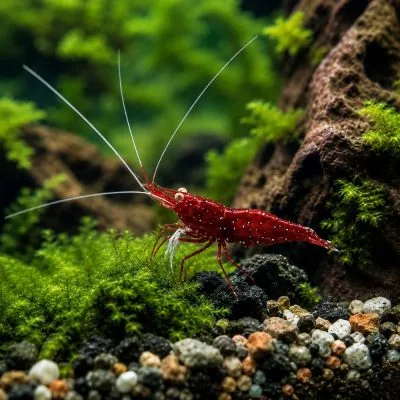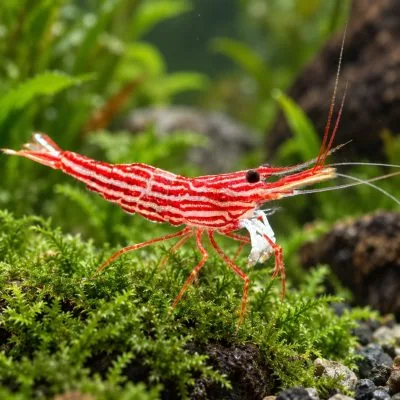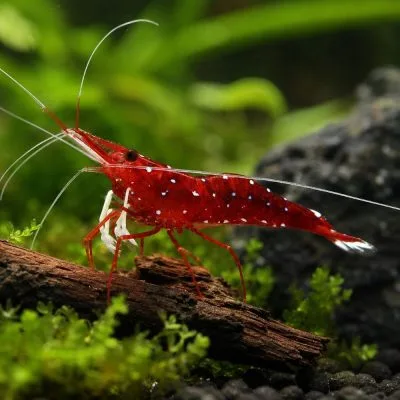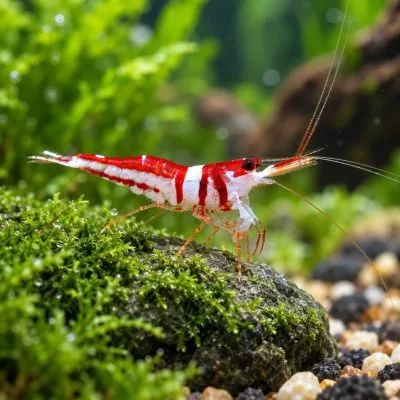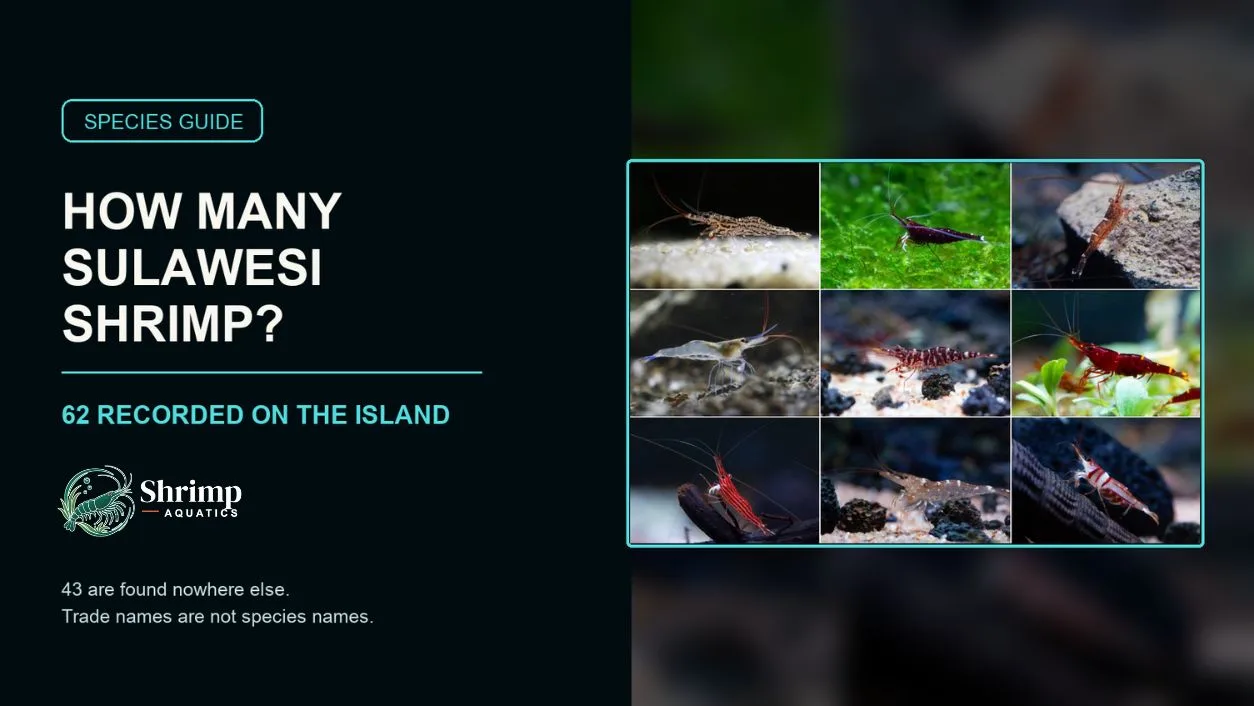
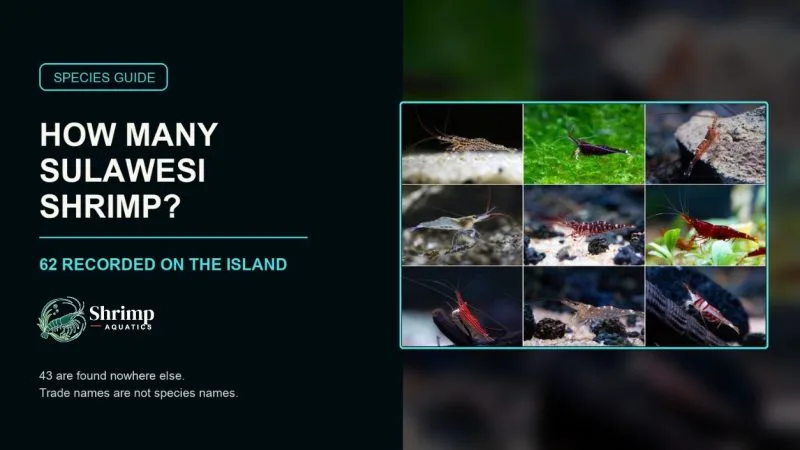
Every page you check seems to give a different number of Sulawesi shrimp species, because each one is counting something different. If you mean the lake species the hobby calls Sulawesi shrimp, it’s about two dozen, out of 62 atyid shrimp species on the whole island. The most recent island-wide survey of Sulawesi’s atyid shrimp counts those 62 in five genera. Of them, 43 live nowhere else, and 24 of the endemic species live in the island’s ancient lakes. The same study estimates at least 10 more river species that haven’t been formally described yet.1 The aquarium trade works with a far shorter list than that, and it sells those few species under many more names than there are species.
Which Sulawesi lakes and rivers the described species come from
They come from two ancient lake systems and the streams running out of them: Lake Poso in central Sulawesi and the Malili lakes to the southeast. In the hobby, Sulawesi shrimp means the Caridina endemic to those lakes and streams, and that’s what the counts below cover. Bee and Crystal Caridina share the genus but not the water. Bee tanks sit cool, soft and acidic at 60-72°F (15.5-22°C) and pH 5.8-6.8, which is the opposite tank. Keep them out of your Sulawesi count, and read the Caridina vs Sulawesi shrimp split before you buy into either group.
Lake Poso was understood to hold six endemic Caridina until 2021. Then five new lacustrine species were described, and the flock was restated as eleven species altogether, nine of them lacustrine and two riverine.2 One of the eleven is adapted to living inside freshwater snail shells.2 Females there carry few eggs, 5-36 of them, and the eggs are large, roughly 0.7-1.1 mm long once the eyespots show. The describing authors read that as direct larval development.2
The Malili lakes carry the larger radiation. The 2009 revision that still anchors the group recognized 21 species from Sulawesi’s ancient lakes.3 Fifteen came from the Malili system, eight of them described as new in that paper, and six from Lake Poso.3 It also identified the Malili group as the largest radiation within the genus Caridina.3
| System counted | Described species | Study and date |
|---|---|---|
| Lake Poso, endemic Caridina | 11, comprising 9 lacustrine and 2 riverine | Klotz and colleagues, 2021 |
| Malili lakes, endemic Caridina | 15, including 8 new in that revision | von Rintelen and Cai, 2009 |
| All Sulawesi ancient lakes, endemic atyids | 24 | von Rintelen and colleagues, 2026 |
| Sulawesi as a whole, all atyids | 62, of which 43 are endemic | von Rintelen and colleagues, 2026 |
Don’t add those totals together. Each was counted on a different date, and the 2026 island-wide figure covers every atyid genus on Sulawesi, not only the Caridina the earlier lake revisions dealt with.
Why the Sulawesi shrimp species count keeps going up
It keeps going up because every proper survey of the island has added species to the list. The 2009 revision roughly doubled the described total for the ancient lakes by adding eight new Malili species and two from Lake Poso. The 2021 Poso work then more than doubled that one lake’s lacustrine species on its own. The 2026 island-wide study puts at least 10 undescribed river species on the board. It also reports that several species long treated as widespread aren’t supported by the genetic data, so some familiar names on older lists are covering more than one animal.
So what is a page telling you when it hands you one confident number? Mostly when it was written, not how many species exist. If you want a figure you can defend in a conversation, quote the count together with its study and its date, the way the table above does.
Is a trade name like White Sock a separate Sulawesi shrimp species?
No, usually it isn’t. Most names on a stock list are line or color names, and the types of Sulawesi shrimp on sale map onto only a few species. It’s common for several names to share one species, so a long stock list can still be a short species list.
Why only a few Sulawesi shrimp species reach home aquariums
Because almost every one of them lives in a single lake and nowhere else, and because the young don’t travel. A few are narrower still: the sponge shrimp is recorded only from sponges in the outlet bay of Lake Towuti.3 Broods are small and the eggs are large. The direct development described above for Lake Poso sends the young out as miniature shrimp, not drifting larvae. So a species lost from its own lake has no population elsewhere to refill it. That’s why wild populations are fragile, and the Red List reflects it. The cardinal shrimp is Caridina dennerli, listed on the Red List as the Sulawesi cardinal shrimp, and it was assessed as Critically Endangered in 2018.4 Wild females of the same species, examined for the 2009 revision, carried only 8-14 eggs each.3
Captive breeding is the second filter on what you can actually buy. The species you’ll find for sale are the ones that breed in captivity, and that tracks what’s on offer far more closely than the lakes’ species count does. The maker of the Sulawesi remineralizer salts reports that the freshwater cardinal shrimp can be kept and bred with positive outcomes.5 By the same maker’s account, the freshwater harlequin shrimp Caridina woltereckae and the red-banded shrimp Caridina striata remain very difficult to breed in captivity.5
Before you order
This is an advanced to expert group, and a species that’s hard to breed is usually hard to hold. A rarer name doesn’t come with a hardier shrimp, so pick a line that’s already established in tanks. Then ask the seller what water the stock is being kept in right now.
For most keepers that means starting from tank-bred stock, not a wild import. Our Sulawesi shrimp lines are bred by Shrimp Aquatics, not collected from the wild. The same two questions are worth asking of any seller: what was this shrimp raised in, and how long has the line been in aquariums?
Does picking a different Sulawesi shrimp change the tank you need?
No, not in the build. Every lake species in the trade shares one set of Sulawesi shrimp care parameters: warm at 79-86°F (26-30°C) and alkaline at pH 7.5-8.5. Choosing between Sulawesi shrimp types changes your margin for error, not the tank. That stays the one warm, alkaline build the beginner guide to keeping Sulawesi shrimp walks through.
References
5 Sources
- Multiple colonizations of an ‘anomalous island’: origin and phylogeography of Sulawesi’s endemic freshwater shrimp Caridina (Crustacea: Decapoda: Atyidae), abstract, Biological Journal of the Linnean Society 147(2), 15 February 2026.
- Lake Poso’s shrimp fauna revisited: the description of five new species of the genus Caridina (Crustacea, Decapoda, Atyidae) more than doubles the number of endemic lacustrine species, ZooKeys 1009: 81-122, 4 January 2021.
- Radiation of endemic species flocks in ancient lakes: systematic revision of the freshwater shrimp Caridina from the ancient lakes of Sulawesi, Indonesia, with the description of eight new species, Raffles Bulletin of Zoology 57(2): 343-452, 2009.
- Caridina dennerli, The IUCN Red List of Threatened Species 2018: e.T198055A109683594, IUCN, assessed 20 August 2018.
- Sulawesi Mineral 8,5, minerals and trace elements, SaltyShrimp product information page.
Ready to get started?
Shop our Sulawesi Shrimp collection
27 products available · Live Arrival Guarantee
Featured Sulawesi Shrimp
Sulawesi Orange Eyes White Sock
Caridina dennerli
Advanced · 79-86°F · pH 7.5-8.5
From $19.99View Product