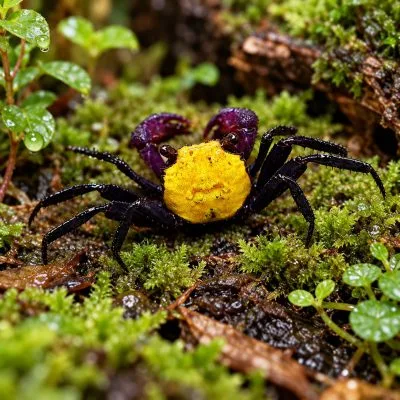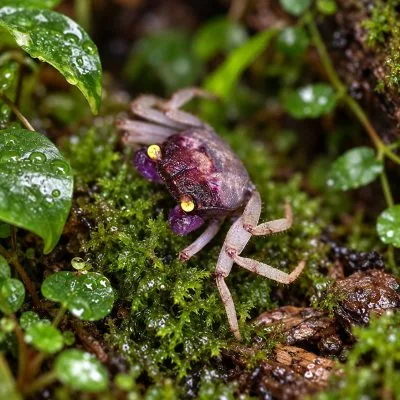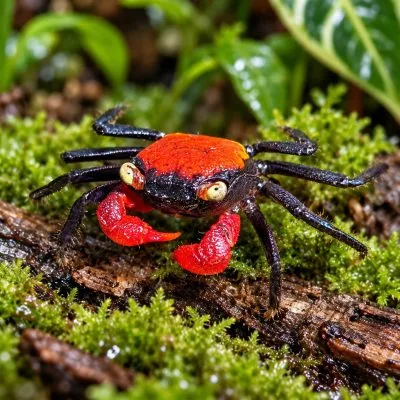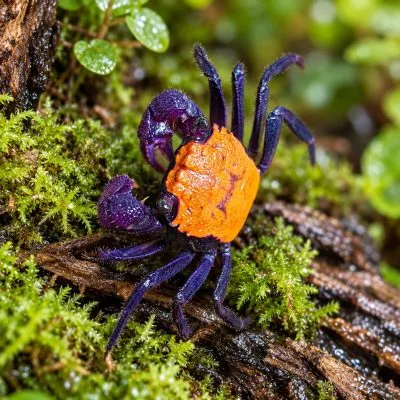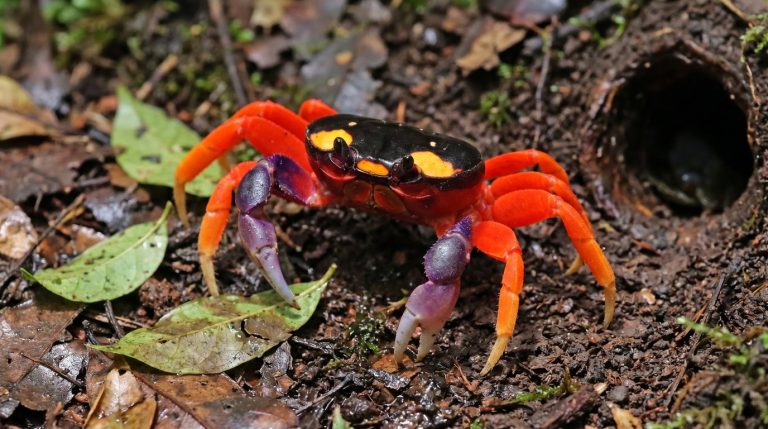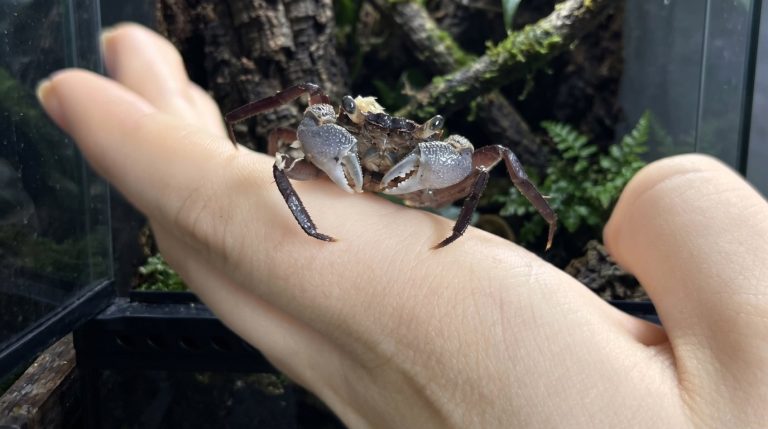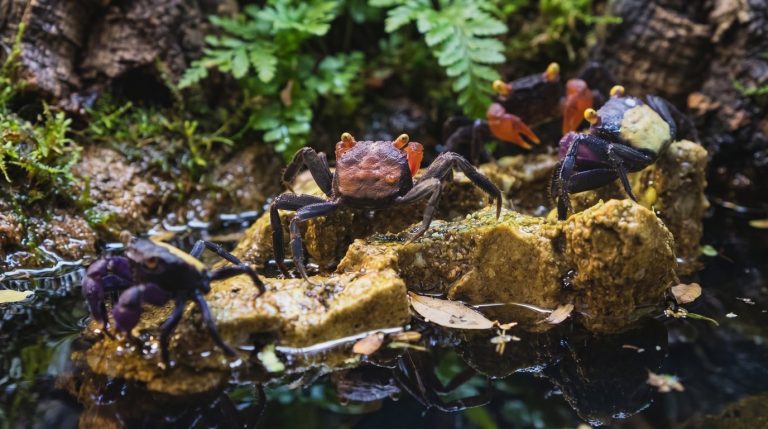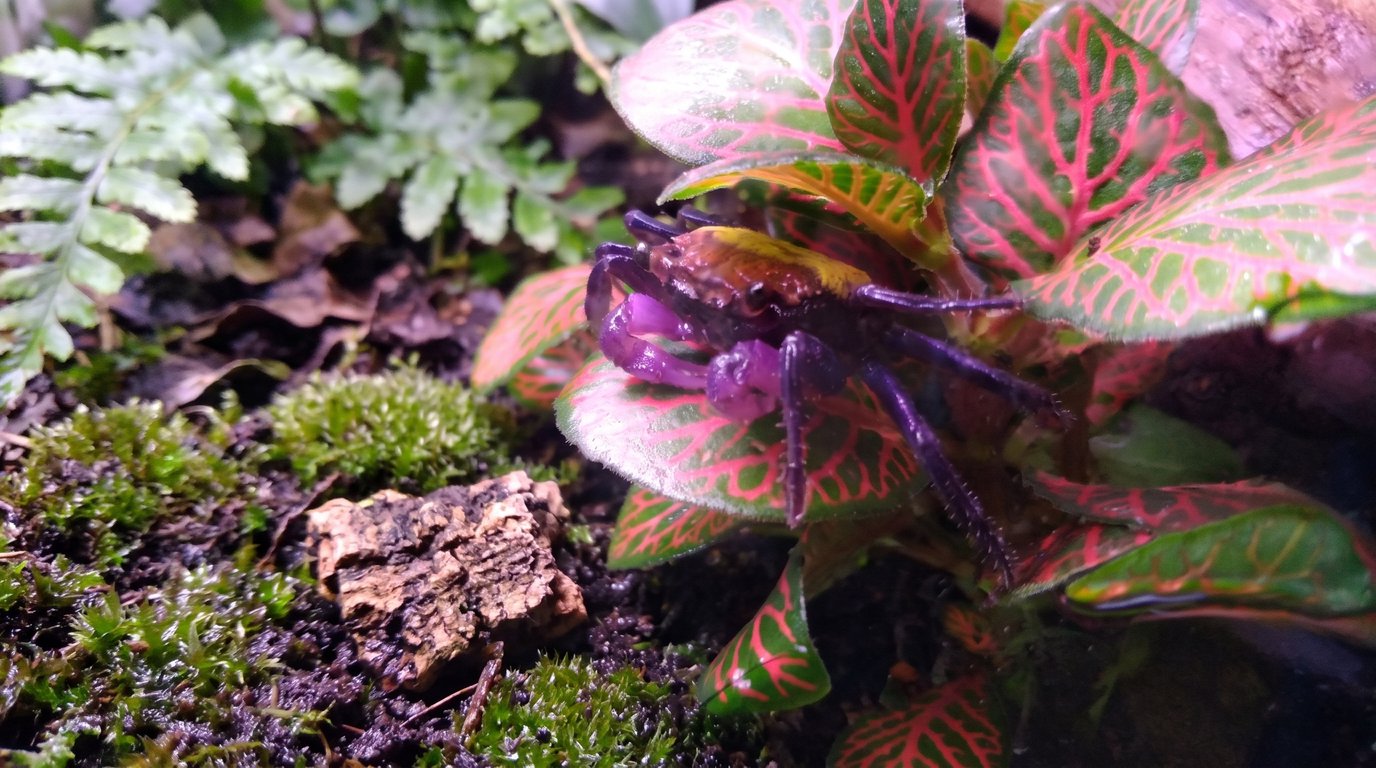
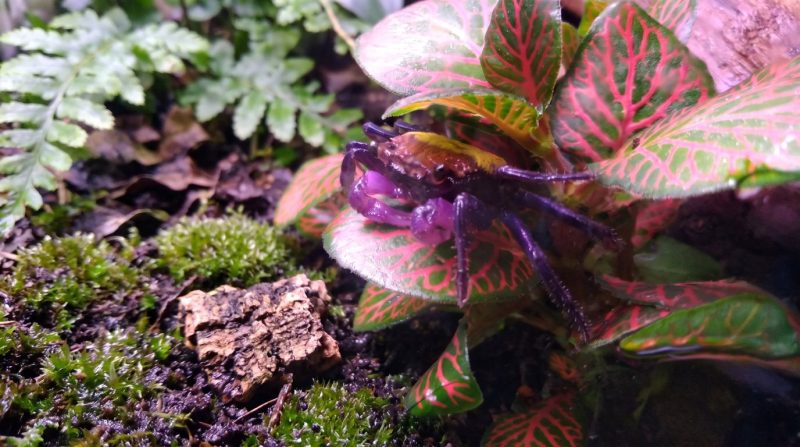
No, vampire crabs aren’t high maintenance once their tank has settled, and day to day they’re easy to take care of. The daily part is small: food in the evening, a misting and a quick look for old food. Most of the effort goes into building the paludarium and getting it through its first weeks. After that, the job is not letting a few things slip: humid air, a tight lid and water a crab can climb into to molt.
What does a settled vampire crab tank need from you each day?
A settled vampire crab tank needs a few small jobs a day: food in the evening, a misting when the moss starts to dry and a check for food left from the night before. None of them takes long, and this daily upkeep is one small part of vampire crab care.
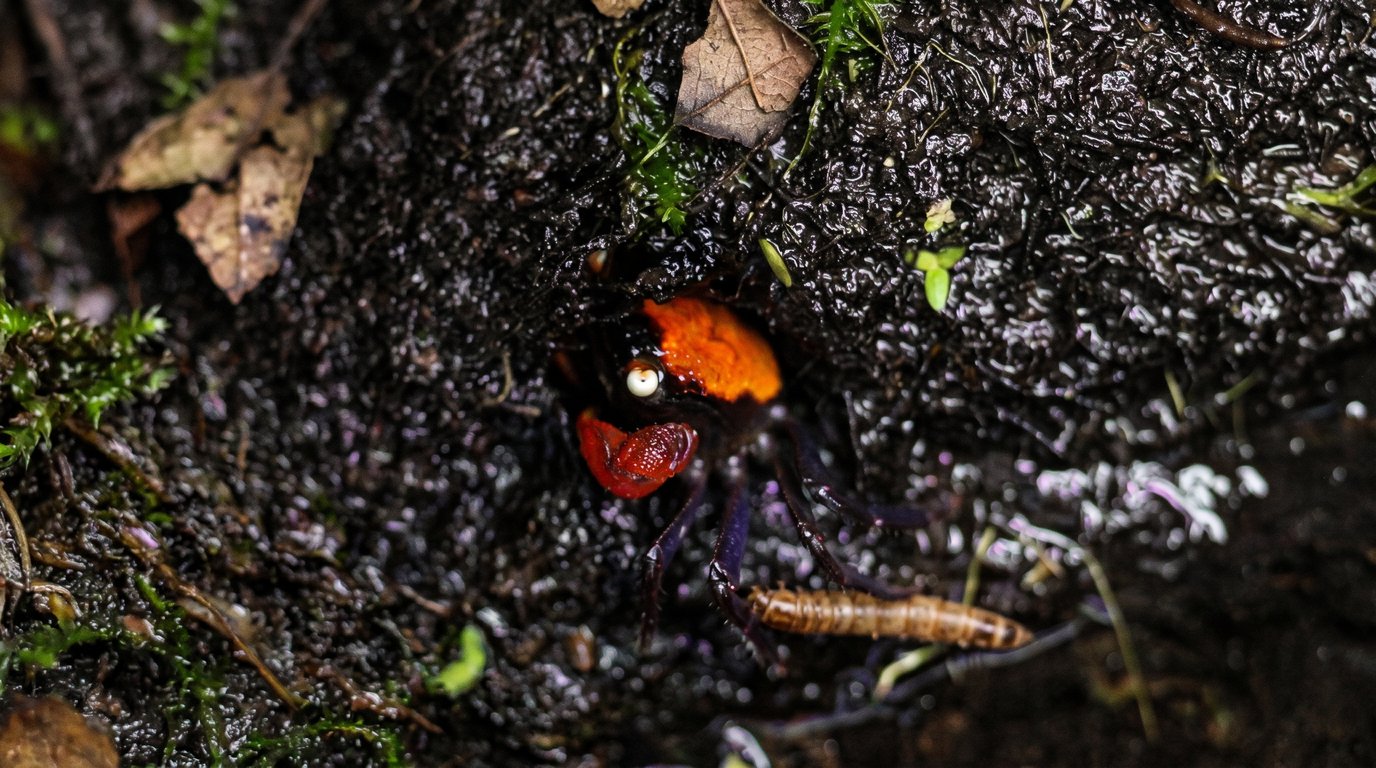
One of our settled crab paludariums takes a few minutes a day: we feed, mist and pick out leftover food. The bigger job is a water change, and we do that when the water needs it.
Put food in around lights-out. Vampire crabs mostly eat in the evening and at night, so you rarely see them eat. You’ll find out in the morning, when the food is smaller or gone. If you’re not sure what to offer, start with the list of what vampire crabs eat.
Misting in a closed tank is about once a day. You’ll mist more while new plants and moss settle in, and less once they’ve adapted. Go by eye: spray when the moss or the top of the soil starts to look dry. Several keepers hand this job to a timer-run mister, and the timing behind how often to mist a vampire crab paludarium is the same either way.
Lift out old food the next morning, before it has a chance to mold. That’s the whole daily round.
How much work is the vampire crab water section?
The water section is where the weekly work sits, and how much depends on its size and whether it has a filter. A small section with no filter needs most or all of its water changed every day or two. A bigger or filtered one is changed about weekly.
In larger planted sections, keepers change a share such as 20-30 percent at a time. A few keepers with a settled, heavily planted section change almost nothing and only top up what evaporates. To change water less often, add a small, low-flow filter, the kind keepers who filter mostly use: a mini corner filter, an air-driven sponge or a very small pump feeding a waterfall.
The change itself is quick. Keepers draw the old water out of a shallow section through a thin tube or hose into a lower bucket, then pour fresh water in. Keepers fill and top up with ordinary tap water, treated with a conditioner or left to stand first. Pairing vampire crab water changes and filtration saves work: a small filter means fewer changes, though a pool without one is fine if you change it more often.
Most vampire crab work comes in the build and the first weeks
Expect the hard part of keeping vampire crabs to come first. You build a lidded paludarium that’s mostly land, with a water section every crab can climb into and fully enter, and then you see it through a few unsettled weeks.
Building the vampire crab tank setup is a one-time job, not a daily chore: soil and moss for the land, hides, plants and a water section with easy ways in and out.
Then comes mold. It’s common in closed vampire crab tanks, above all in the first weeks of a new setup. It grows on damp wood, coconut shells, soil, moss and soft plants, wherever water sits and the air is still. Pick it out, cut back the wetness or give the tank a little more air. Light mold on new wood can go away by itself within days. Mold that keeps coming back means the tank needs better airflow. Keepers also add springtails or isopods to eat some of it.
New crabs need watching in those weeks too. Newly bought vampire crabs often die between arrival and about two weeks later, even in a tank where other crabs do well. They also stay hidden at first, anywhere from about two weeks to six months before they show themselves. Crabs born and raised in a keeper’s own tank are much less shy. Plan to be home for the first two weeks, so you can check food and look for trouble while the crabs settle.
What you can’t let slip in a vampire crab tank
A few things take almost no time but can’t be skipped: humid air, a tight lid, a water section every crab can fully enter and a room in the right temperature band. They’re why we’d rate vampire crabs as moderate. The hours are low, but a slip here can cost crabs.
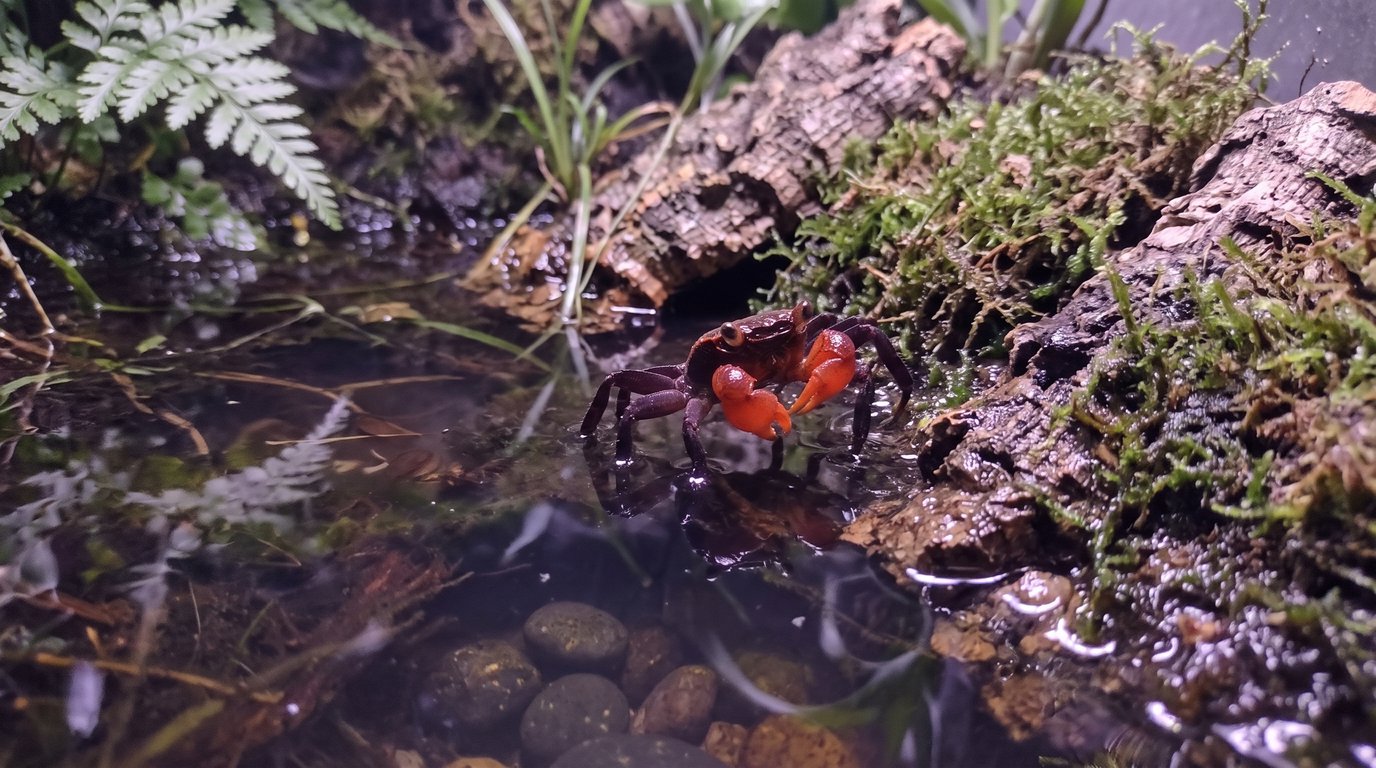
- The moss and soil stay damp from one misting to the next.
- Every gap in the lid is closed, including where cords and tubing come out.
- Every crab can climb into the water section, fully enter it and climb out again.
- The room stays inside 72-85°F (22-29°C), around 78°F (26°C).
Why does humid air matter so much? Semi-terrestrial sesarmid crabs, the family vampire crabs belong to, breathe air by holding water in their gill chambers and recirculating it.1 Dry air is the common failure in vampire crab tanks. A closed lid, moist soil and moss and your misting keep it damp. A lid only does that if it seals. Even a small gap in a cover breaks the water cycle inside and starts a slow loss of moisture, as a university guide to plant terrariums puts it.2 How you keep a vampire crab tank humid mostly comes down to that lid and the moss.
The water section matters because vampire crabs molt in the water. A pool a crab can reach but not get fully into isn’t enough. Care sheets often add a humidity target of 75 percent or more, without a source. You don’t have to chase a number. If the moss dries between mistings, mist more often or close more of the lid.
Are vampire crabs good pets for a beginner?
Yes, if you want a planted tank to watch more than a pet to hold, and you’re willing to build that tank before the crabs arrive. Once it has settled, they’re easy to take care of. What keeps them from being an easy first pet is the start: the build, a few unsettled weeks and new crabs that need watching. So for a beginner we’d call them a moderate pet, not a hard one.
Vampire crabs are a good pet for you if
- You’d enjoy a planted tank you mostly watch.
- You can spare a few minutes most evenings to feed and mist.
- Your room stays inside 72-85°F (22-29°C), or you’re ready to heat the tank.
- You’ll be home for the first two weeks after they arrive.
Pick a different pet if
- You want an animal you can pick up and hold.
- You want to see your pet out and about during the day.
- You want one animal that stays with you for many years.
- You’d rather not build and plant a tank first.
Why can’t you count on seeing them? Vampire crabs spend the day hidden in burrows, under cork or among plants, and keepers often go days without seeing one.
Worried about the claws? Don’t be. A vampire crab isn’t venomous, and the worst it can do is try to pinch. We’d still keep our hands out of the tank, because a crab that drops from your hand can lose legs, and one that runs off is hard to find again.
They’re rougher with each other than with you. In a group, vampire crabs are aggressive enough to cost one another legs and claws, so how many you buy, and how many of them are male, matters.
They’re also short-lived. A compilation of decapod longevity lists about two years at most for three Geosesarma species, taken from species profiles, not from crabs aged in a study.3 If you want to keep vampire crabs for years, plan on a breeding group. That means crablets you’ll want to raise apart, and more work.
If the low daily work and the careful start both suit you, order when you’ll be home for the next two weeks. You choose Male or Female for each crab on the product page when you buy tank-bred vampire crabs. Everything in our catalog is bred or propagated in our own tanks rather than collected from the wild.
References
3 Sources
- Species-specific gill’s microbiome of eight crab species with different breathing adaptations, Scientific Reports 13: 21033, 2023.
- The Terrarium: An Oasis of Humidity for Plants (az2050), Michael Chamberland, University of Arizona Cooperative Extension, May 2023.
- A compilation of longevity data in decapod crustaceans, Vogt G., Nauplius 27: e2019011, 2019.
Ready to get started?
Shop our Vampire Crab collection
8 products available · Live Arrival Guarantee