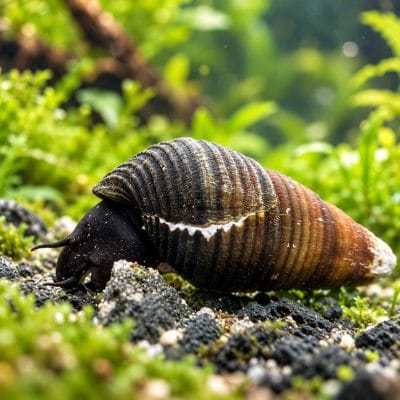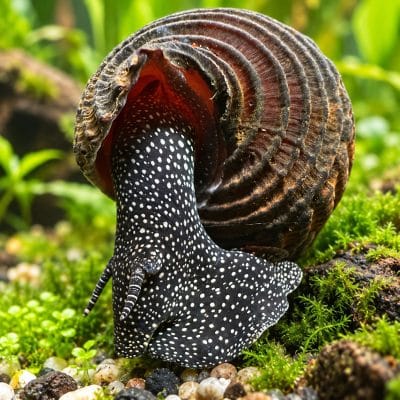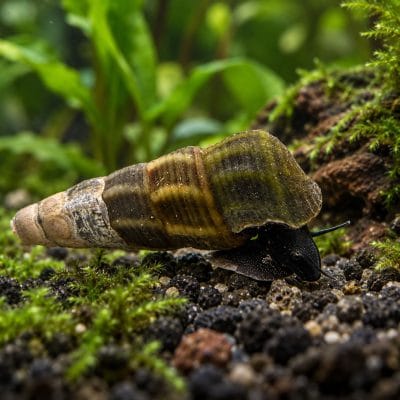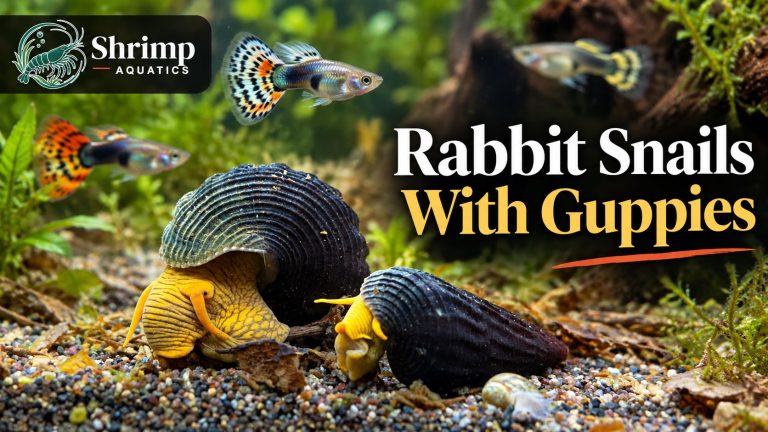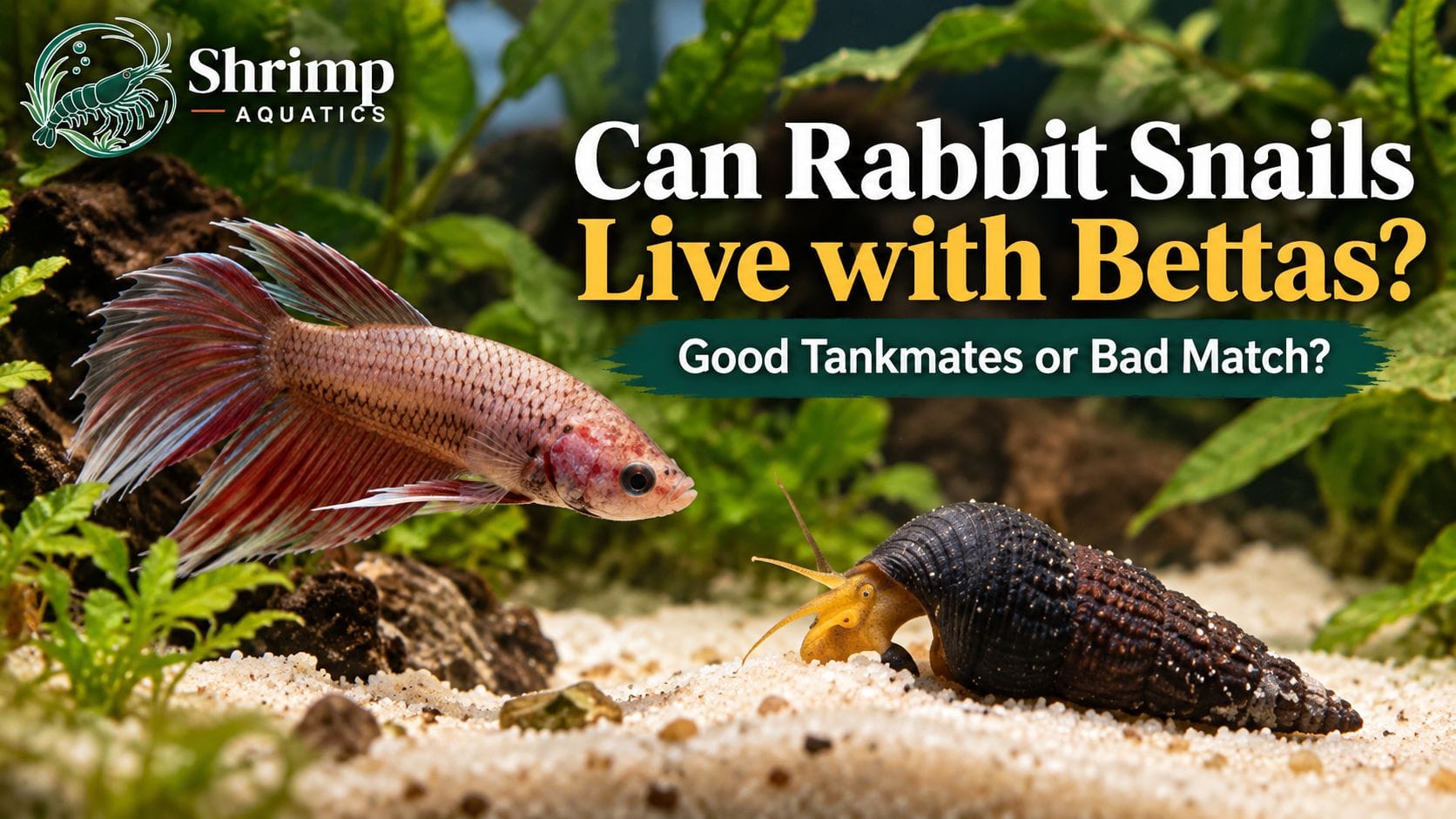

You already have a betta, and a rabbit snail has caught your eye for the same tank. Some keepers do keep the two together, but it’s a poor match and we wouldn’t plan a tank around it, because warmth is the only thing they agree on. A rabbit snail (Tylomelania sp.) needs alkaline, mineral-rich water, a betta comes from acidic water, and many keepers report bettas nipping at a snail’s tentacles.
A betta also rules out the Sulawesi shrimp that normally share a rabbit snail’s tank, and we’d expect it to eat any newborn snails. If you already keep both, the snail’s water has to win, and you’ll want a second tank ready.
Can a betta live in the alkaline water rabbit snails need?
Only by living in water unlike its own, because the snail’s side can’t give. Keep a rabbit snail tank inside the range below and treat it as fixed, betta or no betta.
| Temperature | 79-86°F (26-30°C) |
|---|---|
| pH | 7.5-8.5 |
| GH | 4-8 dGH |
| KH | 3-6 dKH |
| TDS | 150-250 ppm |
| Nitrate | Under 10 ppm |
Why so fixed? These snails come from Sulawesi lakes where, according to the conservation group Sulawesi Keepers, the water sits around 84°F (29°C) and is high in oxygen, very clean, soft and yet alkaline.1 Bettas (Betta splendens) come from the other end of the pH scale. In the wild, one population studied in Thailand lived at around pH 5.5.2
So warmth isn’t the problem. Acidity is. Plenty of betta keepers report fish doing fine in harder, more alkaline water, but that’s keeper experience, so treat it as the risk you’re taking on the betta’s behalf.
Meeting the betta halfway is the tempting fix, and it’s the one to skip. Catappa leaves, peat and anything else meant to soften or acidify water work against the one thing the snail needs, and a pH or KH that drifts down is exactly what you’re trying to prevent in this tank. Those slow drifts are what Sulawesi rabbit snail care is mostly about: holding one range week after week.
Will a betta attack or eat a rabbit snail?
It won’t eat an adult, but it may harass one. A grown rabbit snail is a large, heavy-shelled animal, far too big for a betta to swallow, which leaves the tentacles as the soft spot. Rabbit snails hold theirs out in front while they graze, and betta keepers often report fish that nip at snail tentacles. Bettas vary a lot, though, and some ignore snails completely. If yours does nip, there’s little you can do to stop fish attacking rabbit snails short of separating them.
Why does a nip matter if it doesn’t kill? A snail that keeps getting nipped tends to stay shut in its shell, and a rabbit snail that won’t come out isn’t grazing. Before you blame the betta, though, remember it’s common for new rabbit snails to stay withdrawn for a week or so after arrival anyway, so give a new snail a few days first.
Baby snails are a different story. Rabbit snails carry their young in a brood pouch, and in one Malili lake species the embryos reach only about 5 mm.3 We’d assume anything that small is food to a betta, so a betta tank isn’t the place to expect young to grow up.
What a betta costs a Sulawesi rabbit snail tank
Mostly, it costs you the shrimp. Rabbit snails share their water with Sulawesi shrimp, and a betta is a real predator of shrimp, shrimplets above all. You can have the betta or the shrimp in this tank. You can’t sensibly have both.
It also changes how you handle illness. Bettas get sick like any fish, and some fish medicines contain copper, which has no place in a snail tank. If the betta ever needs treating, move it to a separate tank and keep copper out of the snail’s water.
And it changes how you run the water. Bettas seem to do best in calm water, so heavy filtration can work against them,2 while the snail’s lake water is rich in oxygen.1 Most keepers get oxygen in through gentle surface movement, not a strong current. Still, it’s one more compromise to manage.
Which tankmates suit a rabbit snail better than a betta?
Sulawesi shrimp, if you want company in the tank. They live in exactly the same water, so the question is grazing space, not compatibility. Both feed on the same film of algae and biofilm on rock and glass, and a snail this size counts toward that load, so give them plenty of mature rock. Keeping rabbit snails with Sulawesi shrimp works when the rock grows film faster than both can clear it.
Two swaps that look easy aren’t. Neocaridina such as cherry shrimp are usually kept at 65-78°F (18-26°C), but they grew, matured and bred at 82°F (28°C) in a published study.4 So a small group can live in this tank’s range, as when you keep rabbit snails with Neocaridina shrimp, but a betta will hunt them just as it hunts shrimplets. Assassin snails prey on other snails and should never go in. Every other name on the usual lists of rabbit snail tankmates has to pass the same water test first.
If you’re stocking a Sulawesi tank without a betta, our Sulawesi snail lines are tank-bred by Shrimp Aquatics, not collected from the wild. We don’t promise breeding, sex or the number of young from any order.
How to keep a betta and a rabbit snail together if you already have both
Set the tank up for the snail first and fit the betta around it. These are the checks that decide whether it works:
- Hold the water inside the range above, and test pH and KH often enough to catch a slow drift.
- Add the snail only to a mature, fully cycled tank with a visible film of algae and biofilm on rock and glass.
- Watch the betta closely for the first week or two, and note whether it goes for the tentacles.
- Keep a second tank cycled and ready, so you can separate them the day nipping becomes a habit.
- Feed the betta at the surface and lift anything it leaves before it rots on the bottom.
If the betta keeps nipping or the snail stays shut for days, separate them. In most homes the betta is the one to move, since a separate betta tank can be run in the calmer, more acidic water it comes from.
What the research says about keeping bettas with rabbit snails
None of the fish or shrimp studies behind this guide looked at rabbit snails, so read them as background. The betta findings come from a University of Florida extension publication on the species. In the wild, one betta population studied in Thailand lived in shallow standing water averaging about 86°F (30°C) at around pH 5.5, with thick plant growth and little oxygen.2 That’s close to a rabbit snail tank on temperature and far from it on almost everything else. The same publication describes research that used water flow as a stressor, which is where the advice to keep a betta’s water calm comes from.2
The cherry shrimp figure comes from a 90-day study in which the shrimp grew, matured and bred at 82°F (28°C).4 It tells you nothing about what a betta would do with them.
References
4 Sources
- Do you know Sulawesi snails?, Markéta Rejlková, Sulawesi Keepers, undated.
- Evolution, Culture, and Care for Betta splendens (FA212), Watson, DiMaggio, Hill, Tuckett and Yanong, UF/IFAS Extension EDIS, 2019.
- Tylomelania sinabartfeldi Rintelen & Glaubrecht, 2008 (species treatment record), from Three new species of the freshwater snail genus Tylomelania from the Malili lake system, Sulawesi, Indonesia, Zootaxa 1852, 2008.
- Tropea, Stumpf and Lopez Greco, Effect of Temperature on Biochemical Composition, Growth and Reproduction of the Ornamental Red Cherry Shrimp Neocaridina heteropoda heteropoda (Decapoda, Caridea), PLOS ONE 10(3): e0119468, 2015.
Ready to get started?
Shop our Sulawesi Snail collection
12 products available · Live Arrival Guarantee