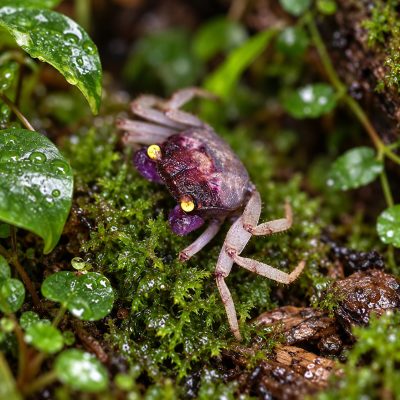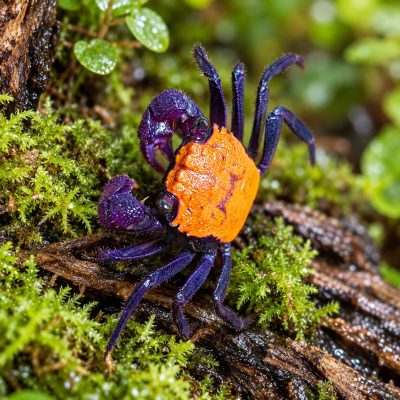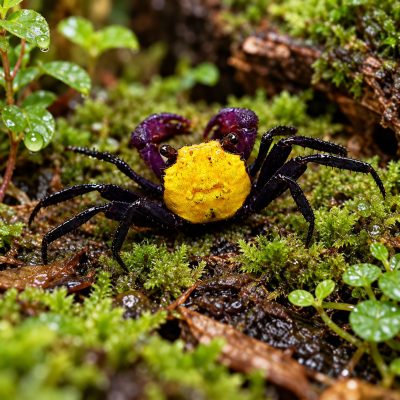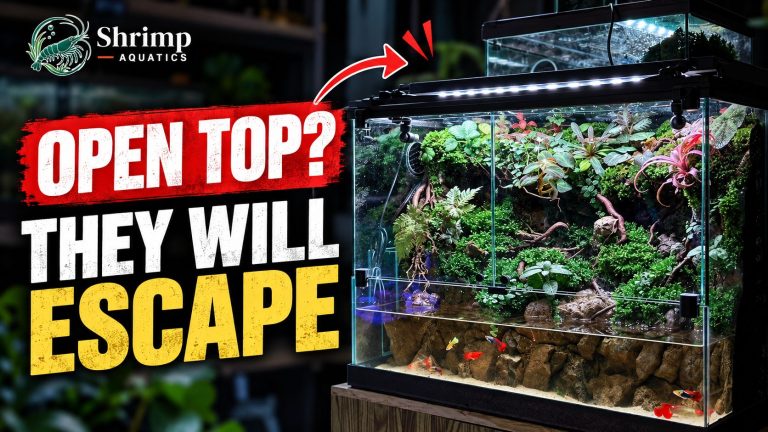
Which vampire crab mistakes actually cost you crabs? The worst ones are in the enclosure itself: too little land, dry air, water a crab can’t climb into and out of, and a lid with gaps. Fix those four first. After them come the mistakes that cost legs, molts and crablets: crowded males, the wrong tank mates, a disturbed molt and young crabs left in with the adults. Every one of them has a fix, and you’ll find it right under the mistake.
Which vampire crab mistakes should you fix first?
Fix the land, the air, the water exit and the lid first, because those are the mistakes that put a crab’s life at risk soonest. The rest run down to habits that mostly cost you crablets or a night’s sleep.
-
Keeping vampire crabs in a fully aquatic tank
Vampire crabs aren’t fish-tank animals. Their genus, Geosesarma, is made up of semi-terrestrial and terrestrial crabs from freshwater habitats.1 So they need a real land section plus water they can climb into, and a flooded tank, or one that’s mostly water, leaves them nowhere to live. Whatever the shop tank looked like, vampire crabs can’t live in water full time. Build a paludarium that’s mostly land.
-
Building a water section a crab can’t climb out of
Every crab has to be able to walk fully into the water and back out on its own. Vampire crabs usually go down into the water to molt, so the water can’t be too small to get into or too steep to leave. Take drowning seriously: a land crab from another family takes in far less oxygen under water than in air.2 When you plan your vampire crab tank setup, give the water a gentle slope or a rough path out on at least one side.
-
Letting the land, moss and air dry out
Keep the tank damp all the time, because dry air is one of the most common ways vampire crabs fail. Land crabs hold water in their gill chambers, and a crab that dries out takes in less oxygen.3 A closed lid, moist substrate and moss, and regular misting keep the humidity up. How often should you mist? Whenever the moss or the top of the substrate starts to look dry. In most closed tanks that’s about once a day, and more often while you’re settling in the best plants for a vampire crab paludarium.
-
Leaving gaps around the lid
Close the lid fully and seal every gap around cords, tubing and hinges before the crabs go in. A tight lid does two jobs at once: it keeps the crabs in, and it keeps the damp air in. Size every gap to the smallest crab you keep, since a slot an adult can’t squeeze through may still let a young one out. Keep plants and decor a little below the lid so nothing props a corner up, and check that it sits flush after every feeding. It’s a dull habit, and a cheap one.
-
Running the tank too warm or too cool
Keep a vampire crab tank at about 78°F (26°C), inside 72-85°F (22-29°C). Put a thermometer in the tank and read it on the hottest and coldest days of the year, not only on the day you set up. If shrimp or fish share the water section, that water also has to stay inside their own range, so don’t push it outside what they need to suit the crabs.
-
Lifting out a molting crab or throwing away its shed
Leave a crab that’s sitting in the water alone, because it may be molting. In our paludariums, a molting crab stays down in the water for a few hours. Our crabs eat their old shell after a molt, so we leave it in the tank for them. Found what looks like a dead crab? A shed has empty, see-through eyes and a hollow body that opens at the back, while a dead crab still has its eyes, is full inside and soon smells. Check those signs of vampire crab molting before you reach into the tank.
-
Putting several males together in a crowded tank
Don’t load a small tank with males. Vampire crabs kept in a group often lose legs and claws in fights, most often when a dominant male chases or attacks the others, and one crab can lose anything from a single leg to both claws. One keeper’s male lost both claws and several legs in a single fight and was left with two legs on each side. Work out how many vampire crabs can live together on your land area before you buy, and give every crab a hide of its own.
-
Choosing fish or snails that don’t fit a crab tank
Keep large, predatory or aggressive fish out, because they can eat a crab or harass one that has gone down to molt. Small fish aren’t automatically safe either. Vampire crabs can catch and eat small fish, especially slow ones that stay near the bottom, so pick quick fish that swim in mid-water and keep the crabs fed. One keeper’s crabs caught two male guppies, and within two hours both were gone. Small snails are partly food, too. The crabs eat bladder snails, small ramshorns and their eggs, while ramshorns from about 1 cm across mostly survive. Before you buy any fish, check that it’s on the list of vampire crab tank mates and that its own temperature range overlaps the crabs’.
-
Adding red claw crabs or any other crab
Don’t add red claw crabs, or any other crab, to a vampire crab tank. Red claw young need different water: their larvae die in fresh water and only grow up in brackish to sea-strength water.4 Red claws kept together also chase and fight, tearing off legs and claws, and a newcomer, a smaller crab or one that has just molted is the usual victim. Settle the vampire crab vs red claw crab question before you buy, and give each its own tank.
-
Leaving crablets in with the adults
Move crablets out to grow up, or move the adults, because adult vampire crabs eat the crablets they catch. In a large, densely planted paludarium some crablets do grow up alongside the adults, but separating them raises the most young. Have a small, humid container ready once a female is carrying eggs, so vampire crab breeding in your tank ends with crablets you can actually raise.
-
Worrying when you never see your crabs eat
Don’t panic just because you never see a vampire crab eat. They mostly eat in the evening and at night, so set a small portion near their hides at lights-off and check the next morning whether it’s smaller or gone. Lift whatever’s left that morning, because food sitting in a warm, closed, humid tank soon grows mold. If food sits untouched morning after morning, work through what to do about a vampire crab not eating.
-
Expecting to see your vampire crabs out all day
Expect to see little of them by day. They’re mostly out in the evening, at night and in the early morning, and by day they sit hidden in burrows they dig, under stones, cork or leaves, or among dense plants. Haven’t seen a crab for a week? Going days without a sighting is common, and some crabs stay out of sight for weeks while they’re still alive. Don’t dig up the hides to count them. Look in after dark instead, since vampire crabs are mostly nocturnal and keep their own hours.
Most of these fixes come back to the same few things: land, damp air, reachable water, a closed lid and a steady temperature. Everyday vampire crab care puts them into one routine. If crabs are already dying, check what you’re seeing against the usual reasons vampire crabs are dying in home tanks, one sign at a time.
What the research says about land, water and air for crabs
None of the studies behind the water and air fixes was done on vampire crabs. Read them as the reason behind each fix, not as numbers for your tank. In a land crab from another family, oxygen uptake under water fell to about a seventh of its value in air, and that crab can’t survive long submersion.2 In land crabs generally, the gill chambers hold water, and when a crab dries out its gills collapse, which is why it takes in less oxygen.3
The red claw figure comes from a lab study of the crab then called Perisesarma bidens, now Parasesarma bidens. Its larvae died within 12 hours in fresh water and only reached the young-crab stage in brackish to sea-strength water.4 That’s the young of a different crab, so it tells you why red claws need their own setup, not what your vampire crabs need.
Order tank-bred vampire crabs once the enclosure is right
Order your crabs once the land, the water section, the lid and the temperature are sorted and the tank has run for a while. Our tank-bred vampire crabs come from several lines, and you choose Male or Female for each crab on the product page. Everything in our catalog is bred or propagated in our own tanks rather than collected from the wild. No one can promise that your crabs will breed.
References
4 Sources
- Shy and Ng, Geosesarma mirum, a new species of semi-terrestrial sesarmid crab (Crustacea, Decapoda, Brachyura) from central Taiwan, ZooKeys 858: 1-10, 2019.
- O’Mahoney and Full, Respiration of crabs in air and water (hosted copy on a University of California, Berkeley lab site), Comparative Biochemistry and Physiology Part A 79(2): 275-282, 1984.
- Lucu and Turner, Ionic regulatory strategies of crabs: the transition from water to land, Frontiers in Physiology 15: 1399194, 2024.
- Islam, Shokita and Nagai, Effects of salinity on the larval development of the mangrove dwelling semiterrestrial sesarmine crab, Perisesarma bidens (De Haan), Crustacean Research 29: 152-159, 2000.
Ready to get started?
Shop our Vampire Crab collection
8 products available · Live Arrival Guarantee